Share this page:

Press release

Publication date: 2026-02-27

Oberbergischer Kreis sees positive development in fiber optic expansion in the municipalities The Head of Planning, Regional Development, and Environment, Frank Herhaus, reports on the advancing expansion

Frank Herhaus, the Oberbergischer Kreis has been committed to a powerful, secure, and future-oriented fiber optic network in the region for years. How successfully is the comprehensive expansion developing?

Currently, the expansion status in the Oberbergischer Kreis is 44.33%, which is about 12% above the average for the state of North Rhine-Westphalia and 10% above the national average in Germany. This is evidenced by the figures in the Federal Broadband Atlas, as of mid-2025. Considering the predominantly rural structures, the district ranks even better in comparison.

Why did the district advocate for companies to independently invest in building a fiber optic network for customers in the region instead of relying on state-funded expansion?

Naturally, the interest of independent telecommunications companies in rural areas is relatively low. Urban structures are significantly more economical for companies due to the potentially higher customer density, especially considering the costs of civil engineering. In terms of public services and economic development, the Oberbergischer Kreis has proactively managed to attract independently operating telecommunications companies to expand large-scale fiber optic networks in the district since 2022.
One advantage of independently financed expansion is that the cities and municipalities of the Oberbergischer Kreis benefiting from it do not have to contribute the usual 20% share of the expansion costs. This would often involve double-digit million euro amounts from the municipalities. Thanks to this initiative by the Oberbergischer Kreis and in collaboration with individual municipalities and cities, independently operating telecommunications companies are now constructing fiber optic networks with a project volume exceeding a quarter of a billion euros in our district.
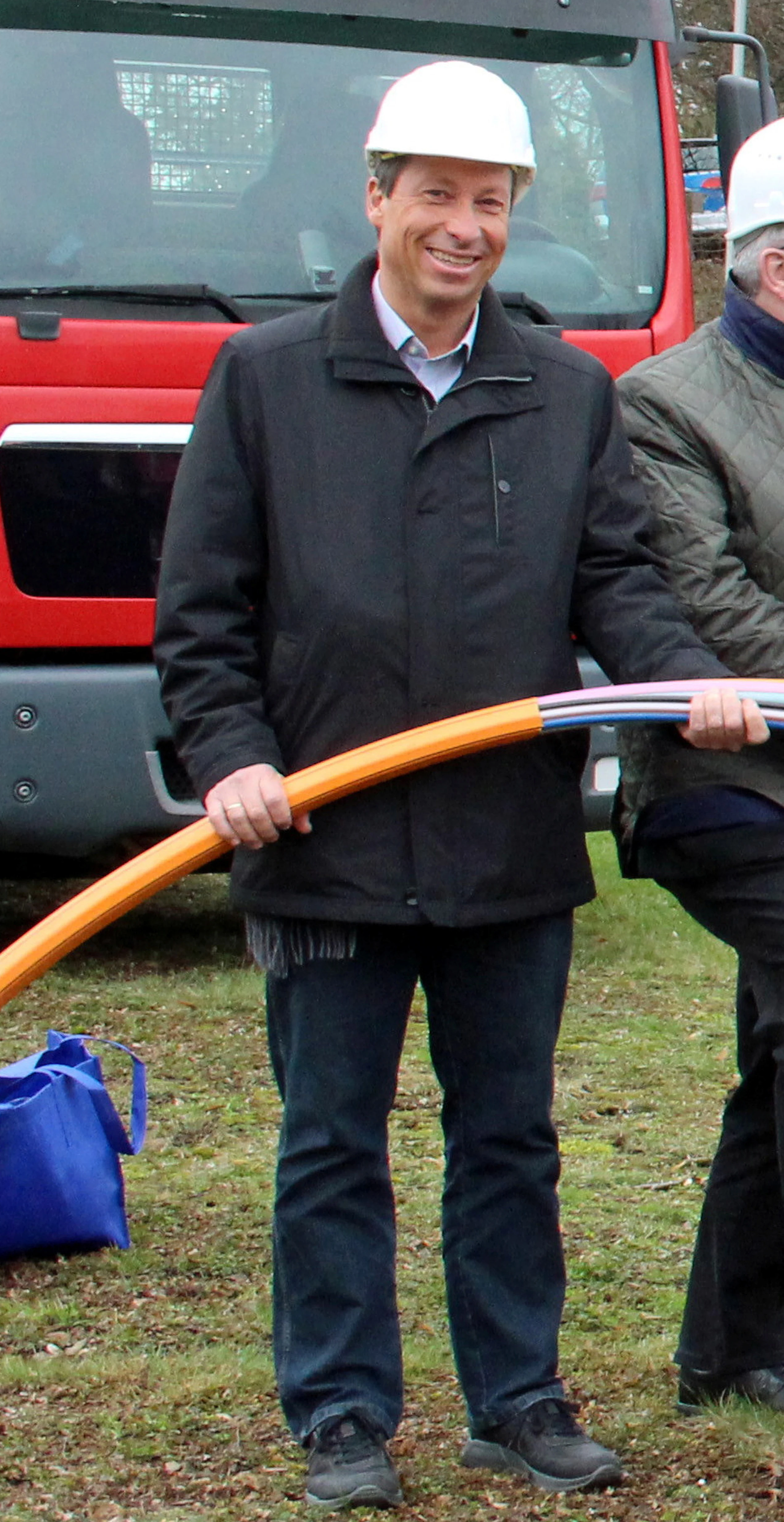
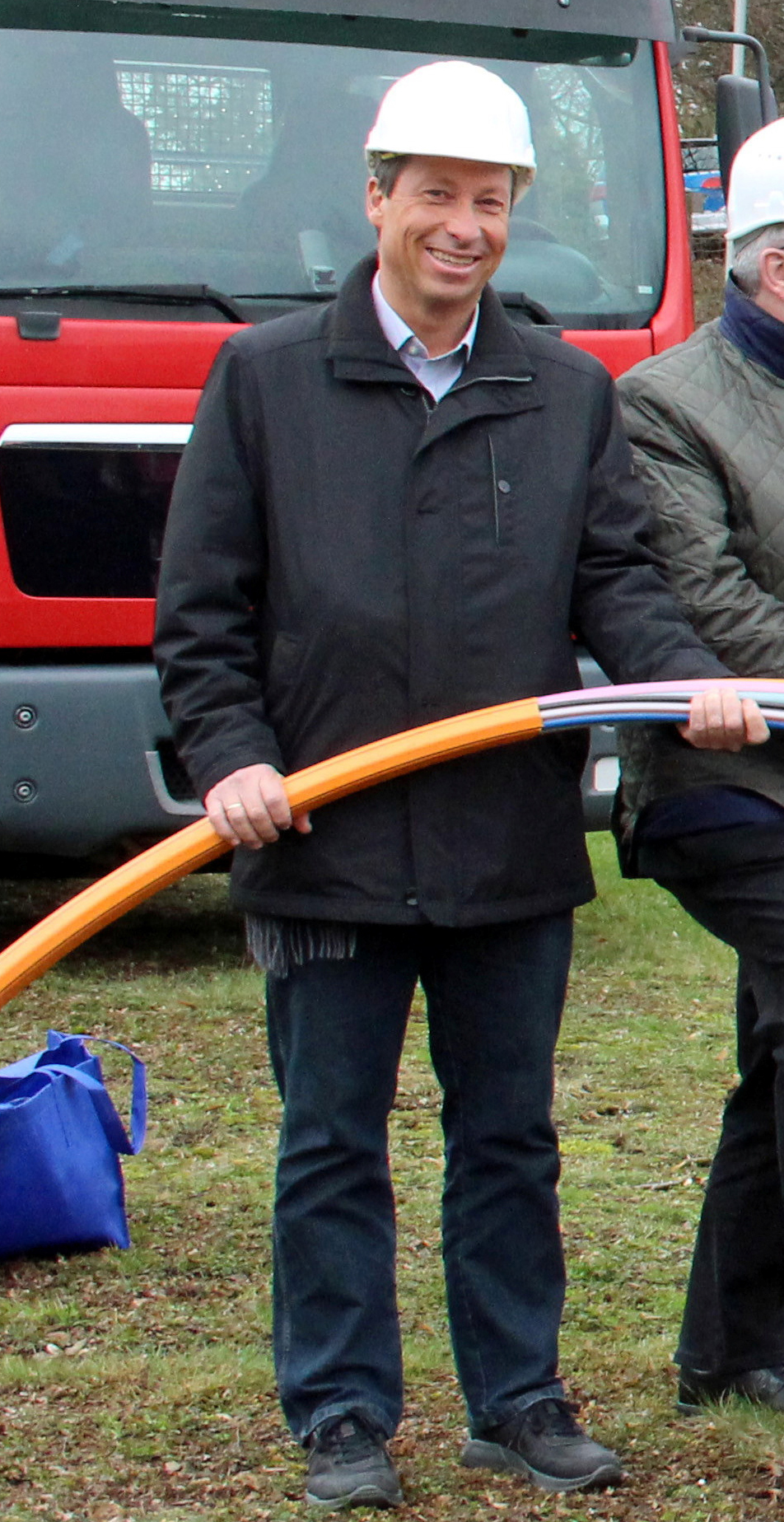
How has the fiber optic expansion developed in the Oberberg region compared to the national average?

The fiber optic network expansion achieved so far in our region is impressive, even in a national comparison: In 2017/2018, only 0.7% of addresses in Oberberg were connected to fiber on average. By mid-2022, a funding project in the central district, along with four municipalities, had already been successfully implemented and completed. The coverage rate in the district rose to 14%. By the end of 2024, the fiber optic coverage rate in the district was already 34.9%, just slightly below the national average of 37.2%. Looking ahead, a coverage rate of 81.5% is expected by the end of 2026.

What has caused this rapid increase?

It stems from the groundwork already laid. Especially in rural areas, extensive trenching must be completed seamlessly between and within municipalities before residents can notice a significant improvement in coverage. The Oberberg district provides advisory and/or coordinating support between the companies, authorities, and associations involved in ongoing projects.

How much influence do the Oberberg district and the municipalities have on a comprehensive fiber optic network expansion?

It should be noted that the telecommunications companies involved are primarily network builders and operators. End customer contracts are generally not concluded with these companies but with the respective service providers. Which network builder cooperates primarily with which service provider is part of the companies' internal (open) access strategy and is subject to applicable competition laws. Therefore, neither the Oberberg district nor the cities and municipalities have any influence on this. They can only propose or suggest sensible collaborations, joint installations, or other synergies, such as in connection with planned municipal construction projects.

To what extent is the Oberberg district also affected by "overbuild," meaning situations where a second company also expands in areas where a network operator has already laid fiber optic cables or plans to do so, resulting in households being provided with a second or third fiber optic connection? 

The issue of "overbuild" is well known to us; however, this is exclusively subject to the internal guidelines and individual decisions of the telecommunications companies involved. We have no information on this. However, we are in daily contact with the companies at the project level and, to date, have observed no reduction in the total planned number of connections. If, in individual cases, a telecommunications company withdraws from a concluded customer contract due to faster expansion activities by a competitor, the customer will be informed, and the contract will be canceled. Customers are, of course, free to sign up for a fiber optic connection with the competitor. However, it is strongly recommended to act only after an official contract cancellation and not to rely on dubious sales pitches from a competitor at the doorstep.

Frank Herhaus, if you were to provide a brief summary - how do you view the fiber optic expansion progress so far?

In summary, we can say that, particularly given the rural structures in many parts of the Oberberg district and the resource constraints in the market (due to the massive nationwide expansion activities), the expansion has steadily progressed in recent years across all 13 cities and municipalities in our district, and the expansion rate continues to be significantly above average. The Oberberg district will continue to advocate for the expansion of high-speed internet in our region. Being well-connected worldwide is essential for all aspects of life: for the further development of our economic region as well as for attractive living and working conditions on-site. 

If photos for download are provided exclusively for media representatives/press, all usage rights (cf. §§ 31 ff. UrhG) according to § 43 UrhG lie with the Oberbergischer Kreis. For reporting purposes, the media are granted a simple usage right according to § 31 Abs. 2 UrhG. When publishing, the image rights specified in the press release must be cited (corresponds to IPTC field no. 110). The additional mention of a natural person as the author according to § 13 sentence 2 UrhG is waived, as this regulation is overridden by the application of § 43 UrhG.