Share this page:

Press release

Publication date: 2026-04-09

Castle researcher investigates the secrets of Schloss Homburg Dr. Joachim Zeune is researching the construction phases of the over 1000-year history of the Oberbergisches landmark

Oberbergischer Kreis. A significant transformation of Schloss Homburg took place most recently in 2014: after four years of renovation, Schloss Homburg presented itself as a modern museum and exhibition venue with attractive spaces for special events and year-round offerings. This new structural and conceptual orientation of Schloss Homburg is considered a "milestone".
With regard to its over 1000-year history, this construction phase, however, is only one of many in the development of the entire complex. The Oberbergischer Kreis seeks to gain new insights into this with the support of Dr. Joachim Zeune, who runs the only nationwide office for castle research. "We want to fill the knowledge gaps from the long history of the castle," says Cultural Office Director Steffen Müller. The castle researcher's interest in this was sparked by drone photos of Schloss Homburg that Dr. Joachim Zeune received from an acquaintance. After initial discussions with the team led by curator Dr. Birgit Langhanke, the scientist began his research activities on the construction history of Schloss Homburg six months ago.

Searching for insights in construction drawings, stones, mortar, and photos   

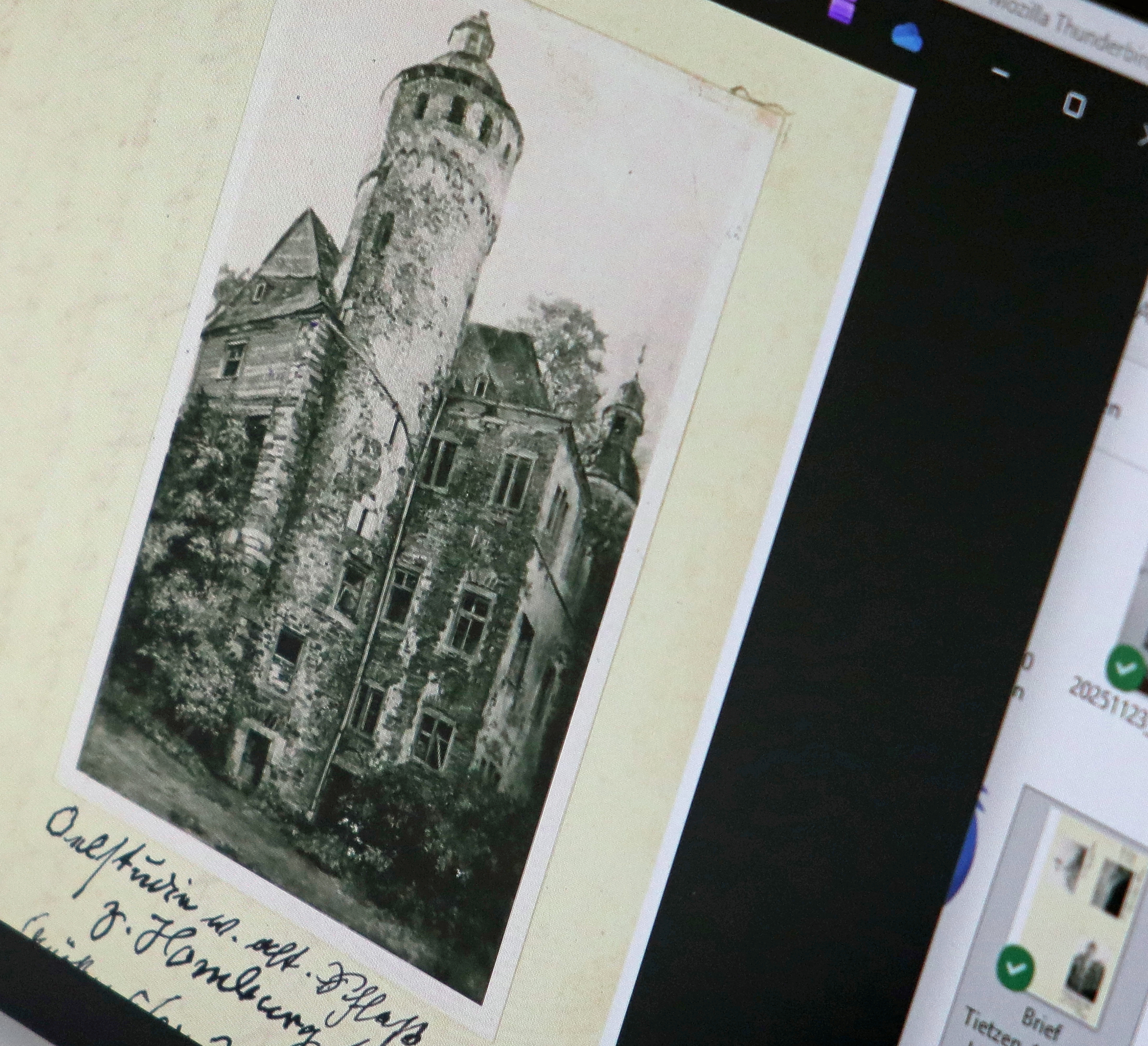
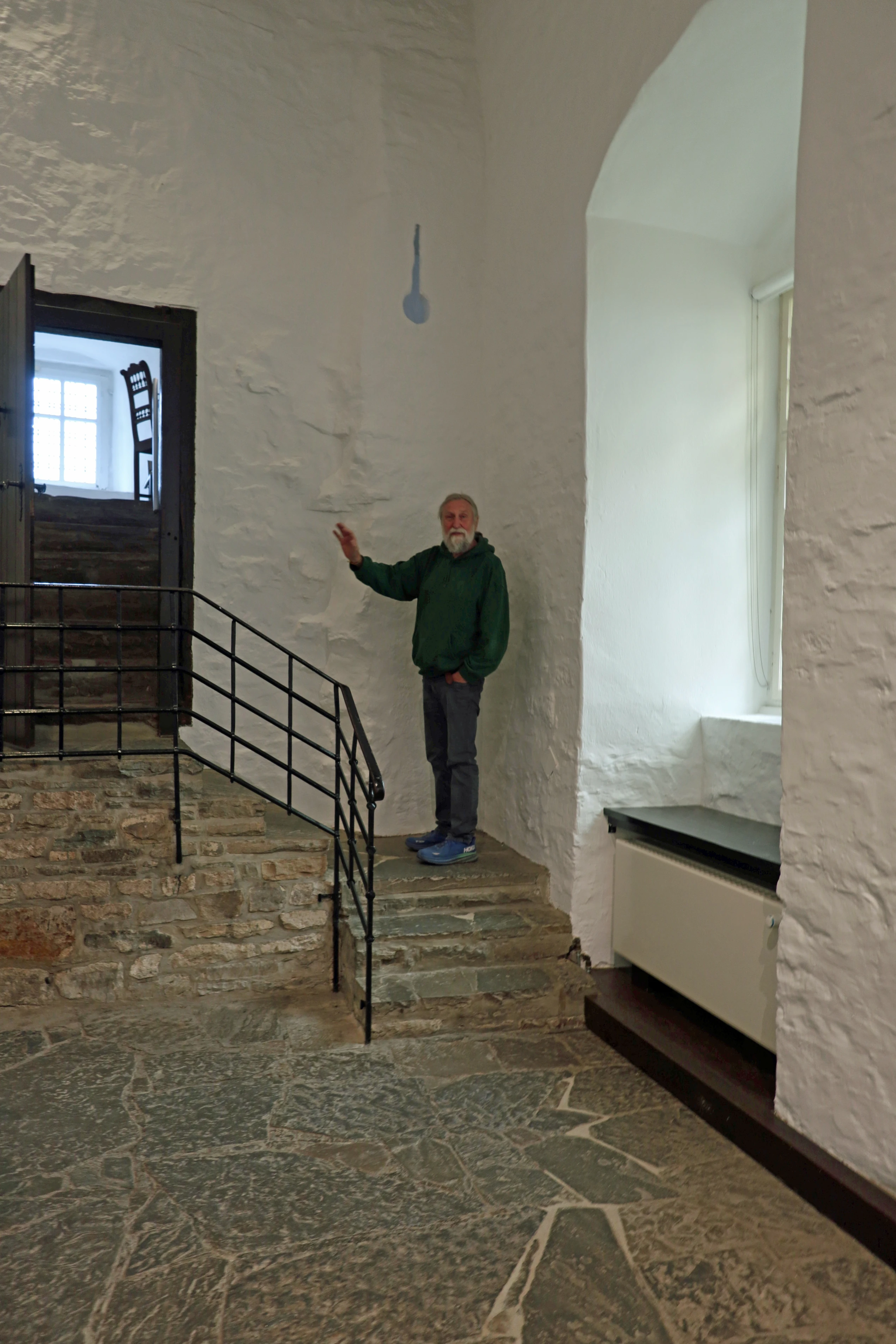
The archaeologist and art historian is considered an authority in the field of castle research and enthusiastically delves into the entire complex with the support of Schloss Homburg's staff: "Through the area of Schloss Homburg's castle kitchen, there once ran a ring wall, which traversed the entire building. At that time, the kitchen was located elsewhere," explains the researcher. Even the distinctive 'keep' likely served a different function. According to Dr. Zeune, it might have been a stair tower originally providing access to the rooms of the demolished south wing. Written references from the 16th century documenting plans for the construction of this tower allow corresponding conclusions to be drawn. 

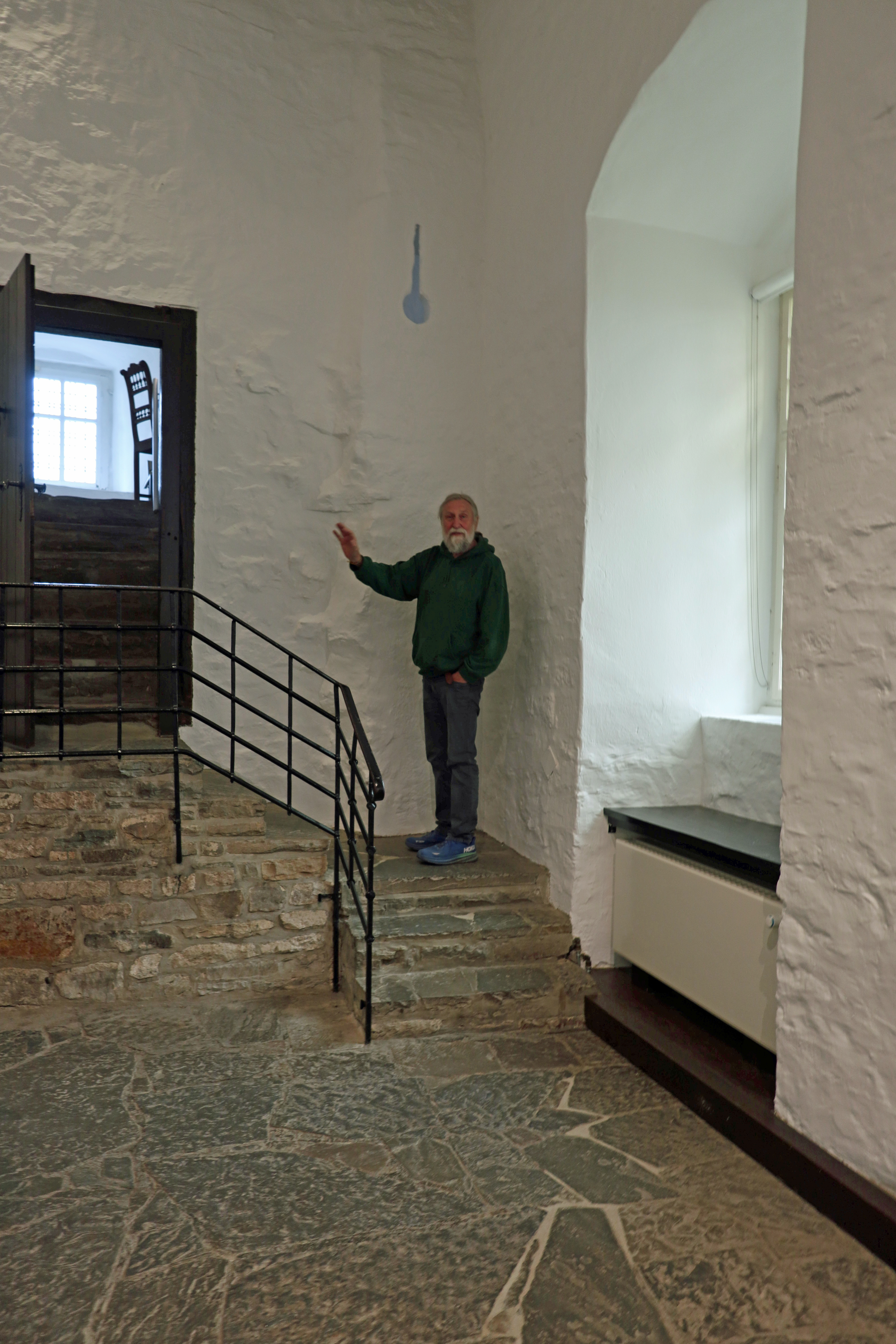
Important clues for dating individual building parts are provided to the scientist by the arrow slits in the west wing of the castle, which do not - as previously assumed - date back to the 12th or 13th century. Dr. Zeune is instead convinced that the arrow slits there were already designed for the use of arquebuses and therefore originate from the 15th century. The arrow slit in the wall of the current castle kitchen points to the ring wall that once ran through here.

The construction history of Schloss Homburg is being rewritten

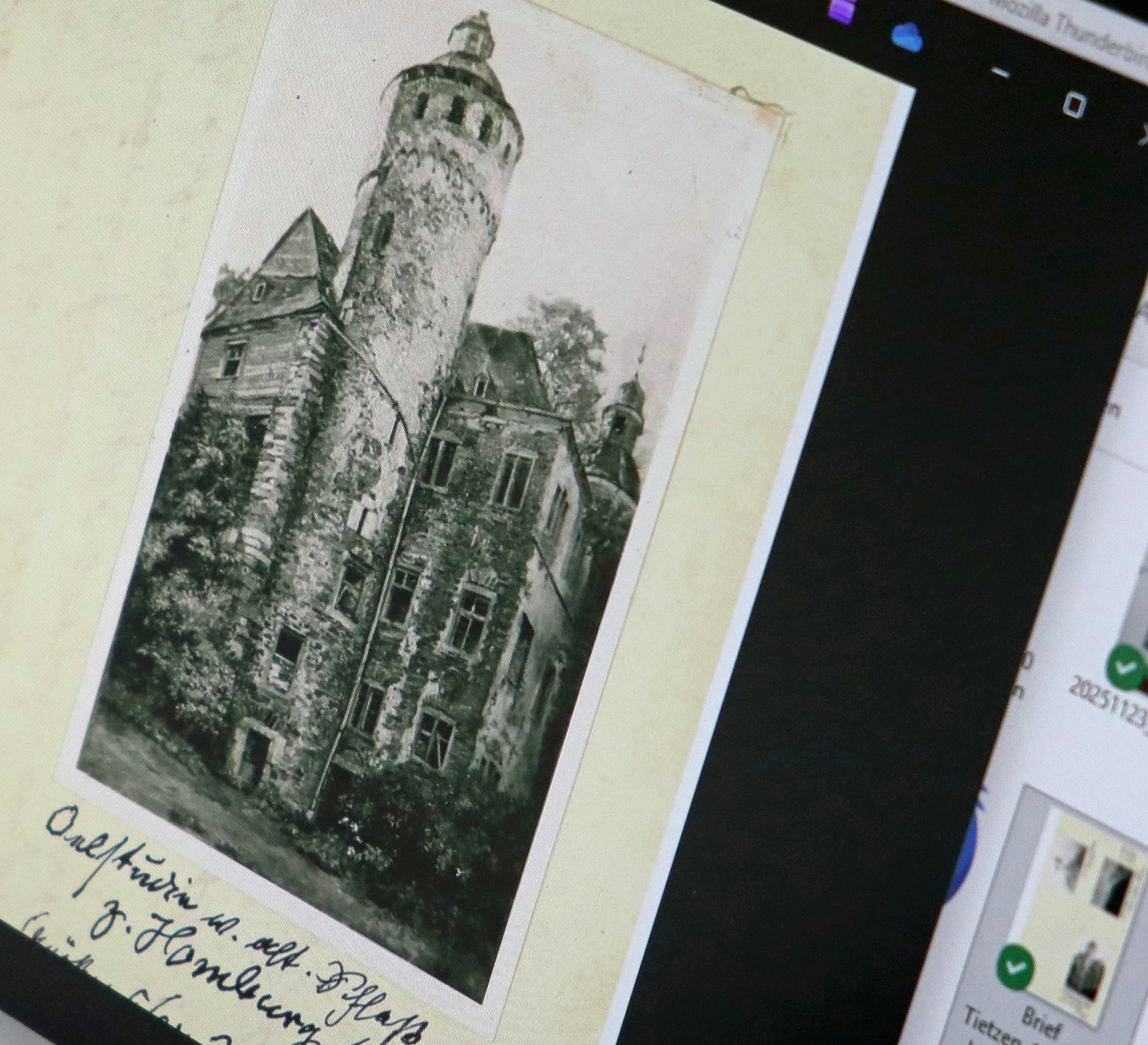
Historical architectural research is both fascinating and painstaking, as castle researcher Dr. Joachim Zeune explains. There are reports from earlier research on Schloss Homburg with differing results and contradictions. Scientists must free themselves from these and approach this castle complex completely impartially, searching for reliable evidence. Every tiny find can provide significant results, such as a triangular-shaped stone used as a lintel in a vaulted cellar of the castle, which may originate from the Romanesque residential tower whose foundations were excavated in 1999.
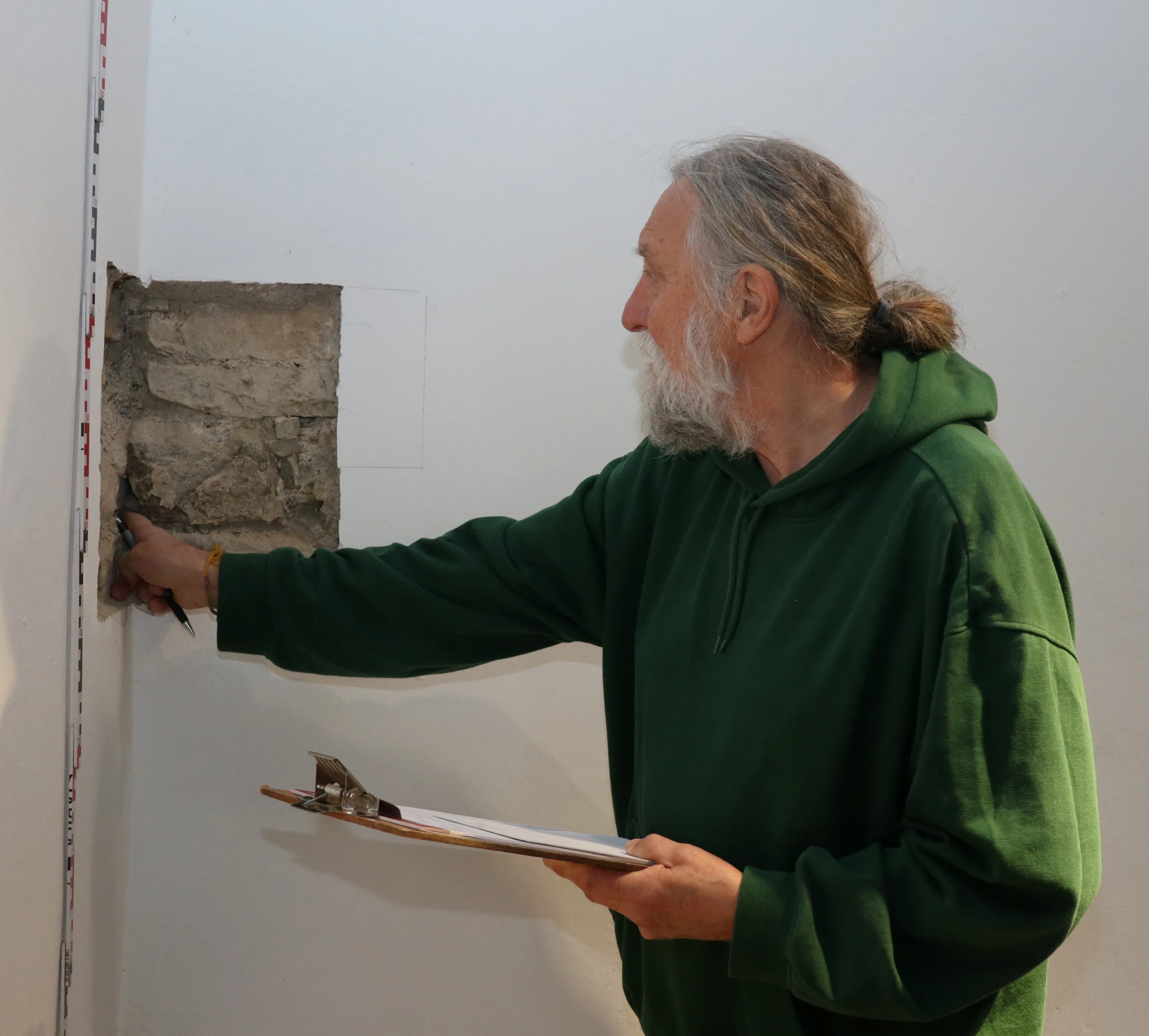
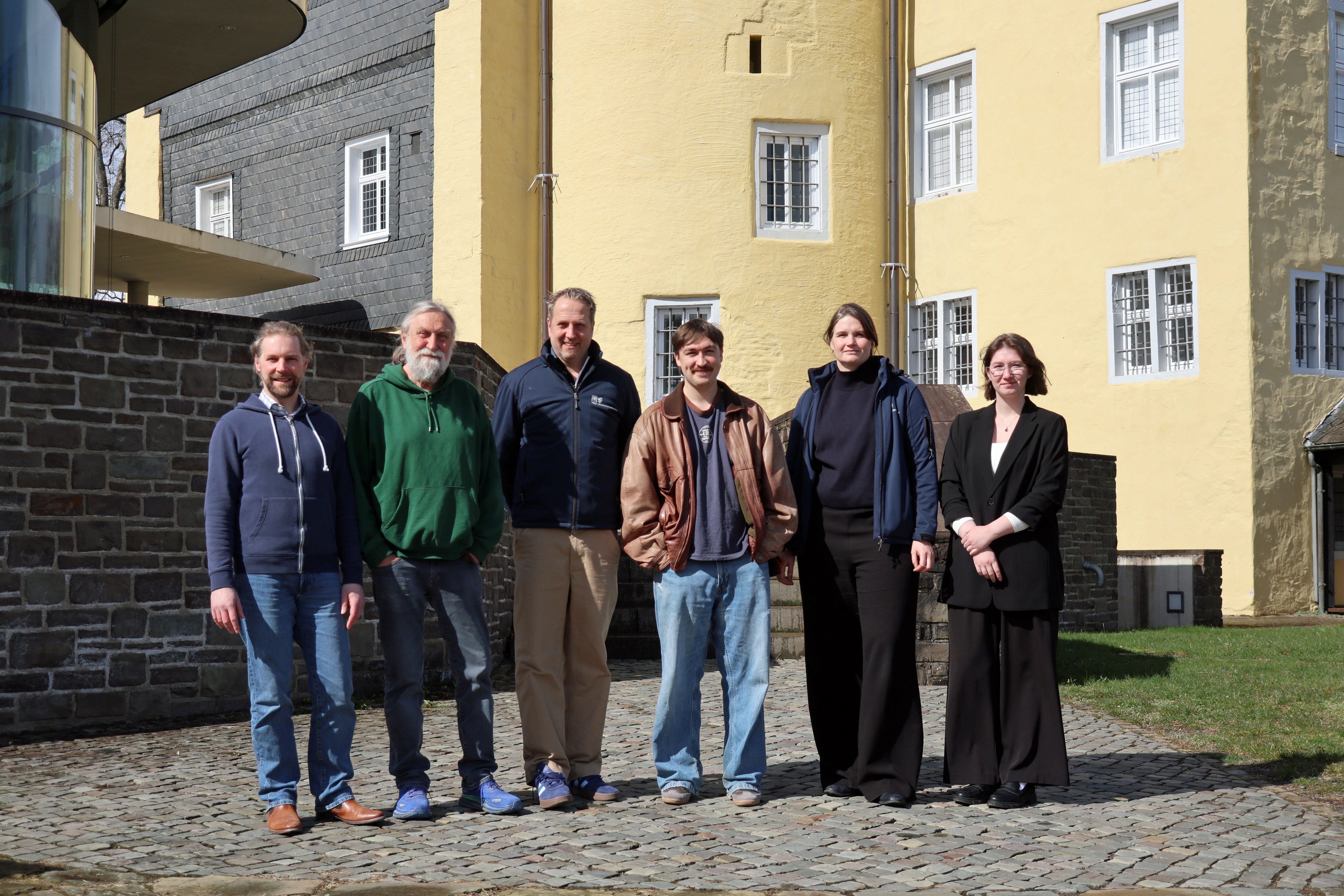
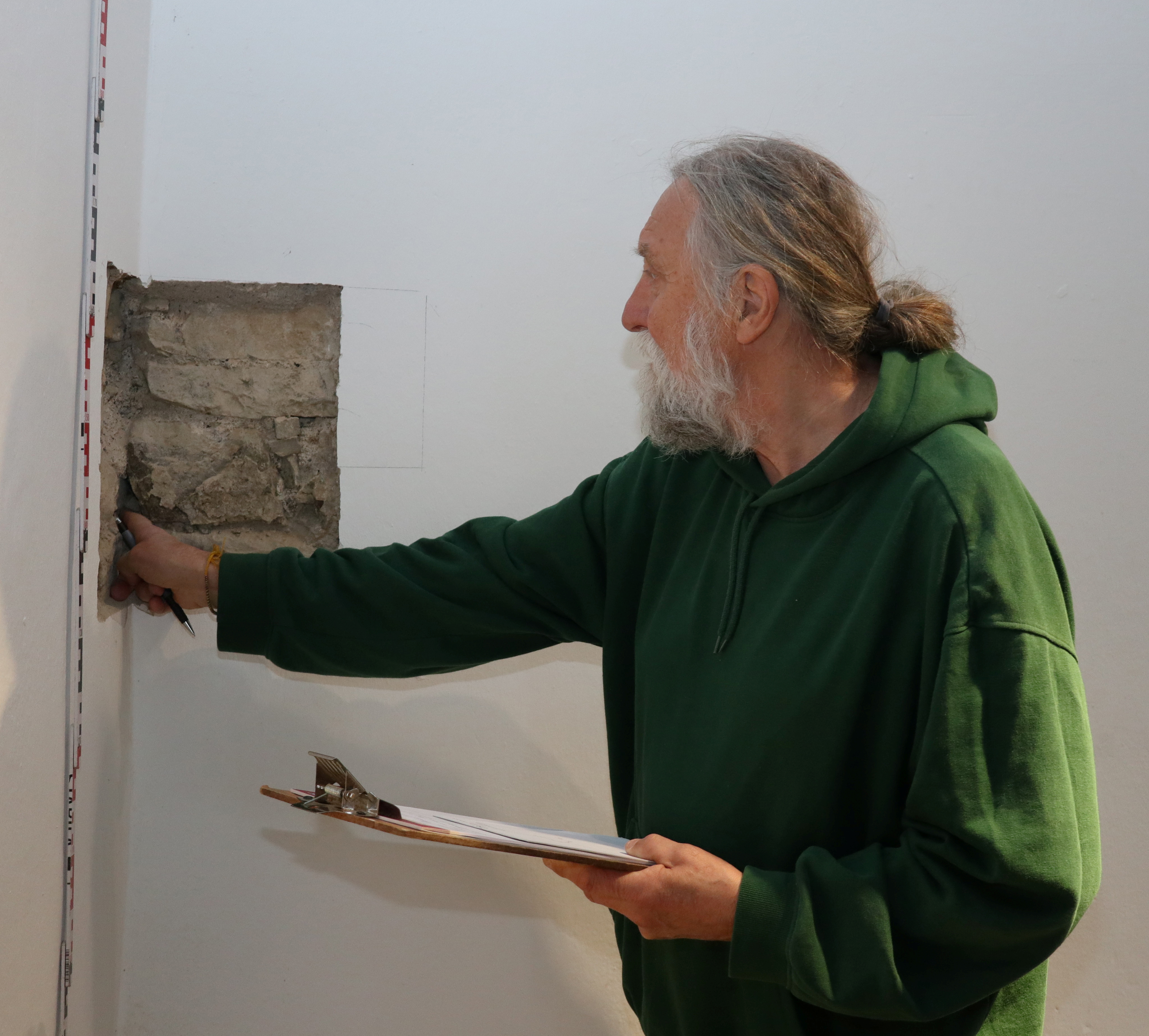
Together with his son Jakob Zeune, a student of art history and history who assists with the research during semester breaks, Dr. Joachim Zeune is currently working on several "cleaning windows" in a side room of the castle kitchen. Together, they have exposed sections of masonry on several walls to compare the condition and course of the respective joints, allowing them to date individual building components.

In the "Garden Room," the castle researchers have set up an office where plans, sketches, photos, and other records and documents are piled up. "The support of the entire team from Schloss Homburg, primarily through Dr. Birgit Langhanke's overview of the object and the literature, is unique," emphasizes the experienced historian Dr. Joachim Zeune. 

"Schloss Homburg is one of the landmarks of the Oberbergischer Kreis that still needs to be researched. To clarify its construction history, investigations of the existing building parts are necessary. These should provide information about the chronological sequence of the many different construction phases of Schloss Homburg. These findings, in turn, must be considered in the context of previous excavation results, such as the discovery of the foundations of a large residential tower in 1999, which led to corrections in dating the structural development. With the castle researcher Dr. Joachim Zeune, the Oberbergischer Kreis has gained a renowned expert who will dedicate himself to this exciting architectural research to uncover new and more precise insights about our castle,“ says Felix Ammann, district commissioner for construction, geoinformation, and culture. 

The research findings should also be visible to citizens
   
The funding for the research into the construction history of Schloss Homburg comes exclusively from district funds. Depending on the scope of the scientific work, additional state funding may be applied for. „We want to bring research to life,“ says Dr. Birgit Langhanke. Therefore, the research findings of Dr. Zeune and his team will gradually be incorporated into the exhibition and thus made accessible to visitors.

Further information can be found at www.schloss-homburg.de.

If photos for download are provided exclusively for media representatives/press, all usage rights (cf. §§ 31 ff. UrhG) according to § 43 UrhG lie with the Oberbergischer Kreis. For reporting purposes, the media are granted a simple usage right according to § 31 Abs. 2 UrhG. When publishing, the image rights specified in the press release must be cited (corresponds to IPTC field no. 110). The additional mention of a natural person as the author according to § 13 sentence 2 UrhG is waived, as this regulation is overridden by the application of § 43 UrhG.