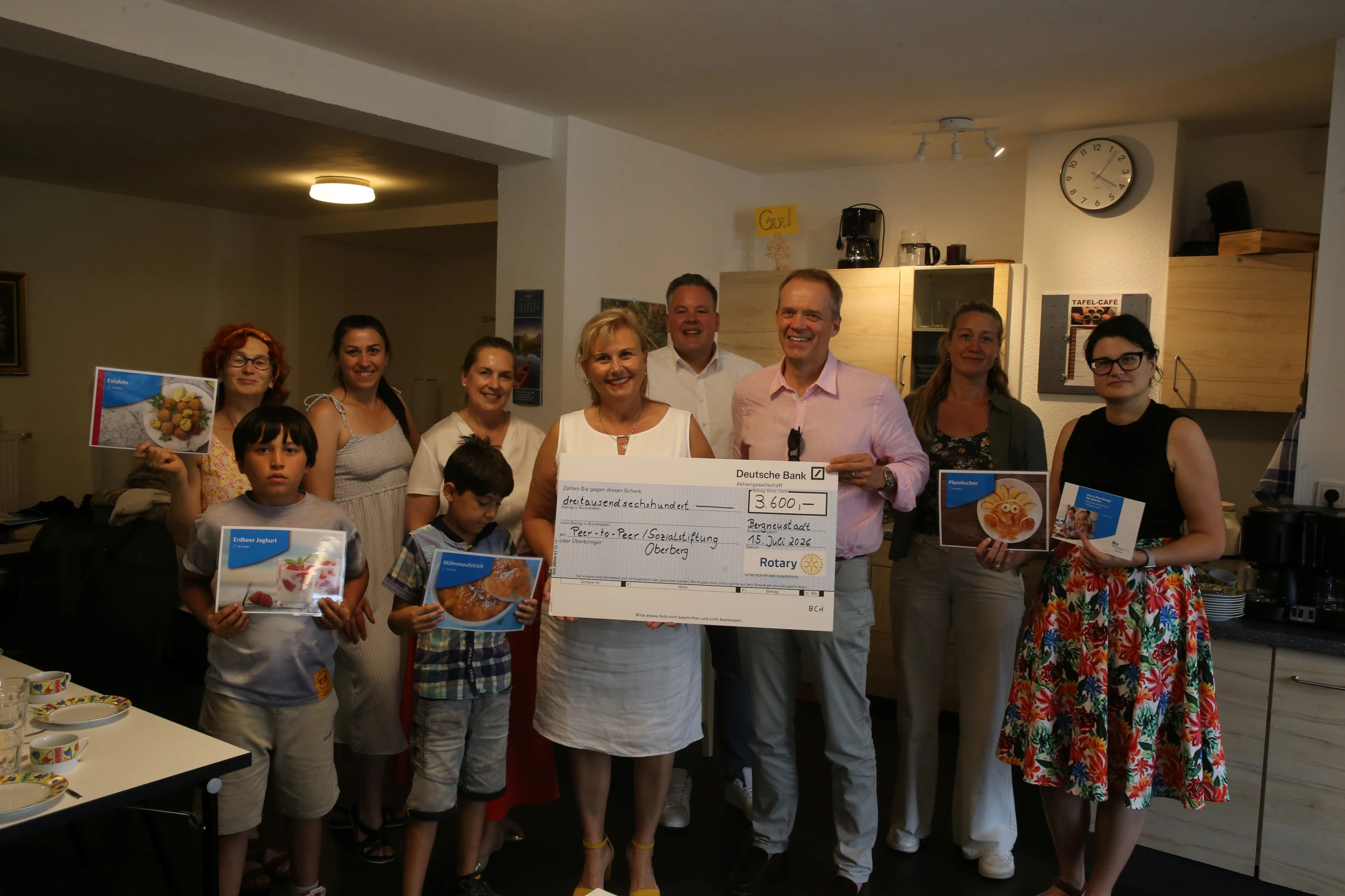
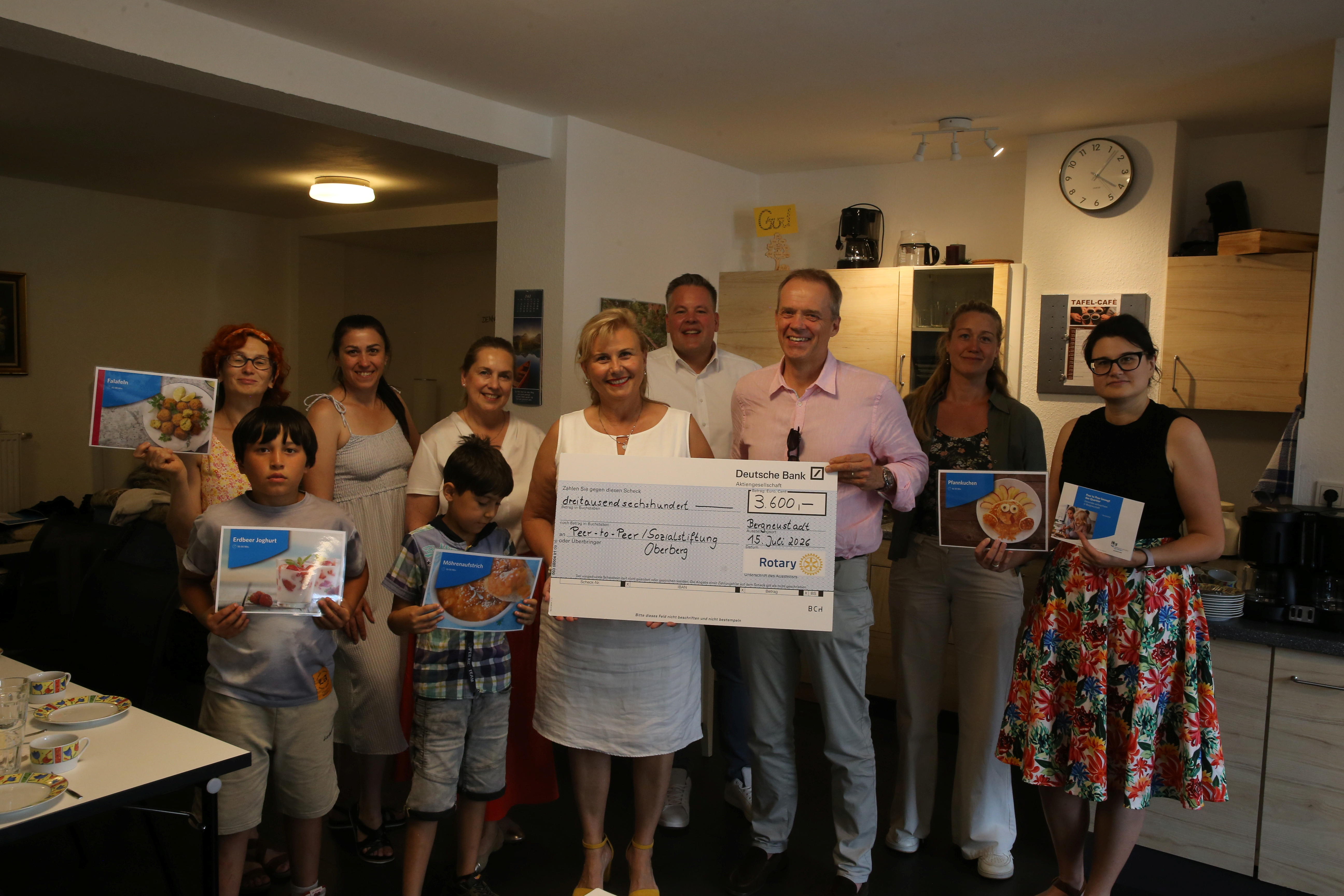
Once or twice a month, women with and without migration backgrounds come together with their children at the International Women's Café to prepare healthy, everyday, and cross-cultural dishes. The focus is not only on the joint preparation of balanced meals but also on mutual exchange and strengthening health-promoting competencies in everyday life. Participants receive practical tips for healthy eating, learn new recipes, and benefit from the communal experience.
The cooking activities are accompanied by volunteer peer multipliers. These are women from the International Women's Café who have been trained as peer multipliers by the Health Department of the Oberbergischer Kreis as part of the project. During the cooking sessions, they prepare healthy, practical dishes together with the children of the participating women and convey knowledge about nutrition and health in a playful manner. For their voluntary engagement, they receive an honorary allowance from the project's funding. The food for the cooking activities is funded by the Rotary Club.
Another component of the project is the newly developed recipe book. The idea arose within the project working group, which expressed the desire for low-threshold cooking offers and simple, healthy recipes for families. In the course of an exchange with the project “Fit in Grünau” of the state capital Düsseldorf, recipes were adopted. These were developed in cooperation with the German Diabetes Center and are characterized by their practicality and health-promoting nature.
The recipe book is particularly aimed at children and their families and will be used in various areas within the project in the future – including cooking activities and other health-promoting offers.
“Health promotion is particularly sustainable when offers are developed together with the people on-site. The cooking activities convey everyday knowledge about healthy eating and simultaneously promote community, self-efficacy, and mutual support. With the recipe book, we also create an opportunity to transfer the content permanently into family life,” says project coordinator Delia Koch.
The cooking activities and the recipe book pursue several goals: They strengthen the health literacy of families, promote teamwork and a sense of responsibility, and impart practical everyday skills. At the same time, they create a safe space for interaction and exchange between women of different cultural backgrounds, thus contributing to social participation in the neighborhood.
The Oberberg Social Foundation has been committed to equal opportunities, education, and social participation through its International Women's Café for many years. The new cooking activities and the recipe book complement the existing offer with two additional health-promoting components.
“Health promotion thrives on strong networks and committed people on-site. With the new cooking activities and the recipe book, we create a low-threshold offer that reaches families in their everyday lives and equally strengthens health, participation, and integration. Our thanks go to all cooperation partners and the volunteer peer multipliers who bring this offer to life with great dedication,” says Kaija Elvermann, head of the Health Department of the Oberbergischer Kreis.
The Health Department of the Oberbergischer Kreis thanks the Rotary Clubs for their support as well as the Oberberg Social Foundation, the volunteer peer multipliers, and the “Fit in Grünau” project for the successful collaboration. The regular cooking activities and the new recipe book exemplify how sustainable health promotion can succeed directly in the living environment of families through the cooperation of various partners.
Further information at www.obk.de/peer-to-peer.