 copyright: OBK, Frank Herhaus
Giant hogweed (giant cow parsnip)
This page was translated from German using artificial intelligence. The translation may contain errors or inaccuracies. In case of doubt, the German original version prevails.
What is giant hogweed?
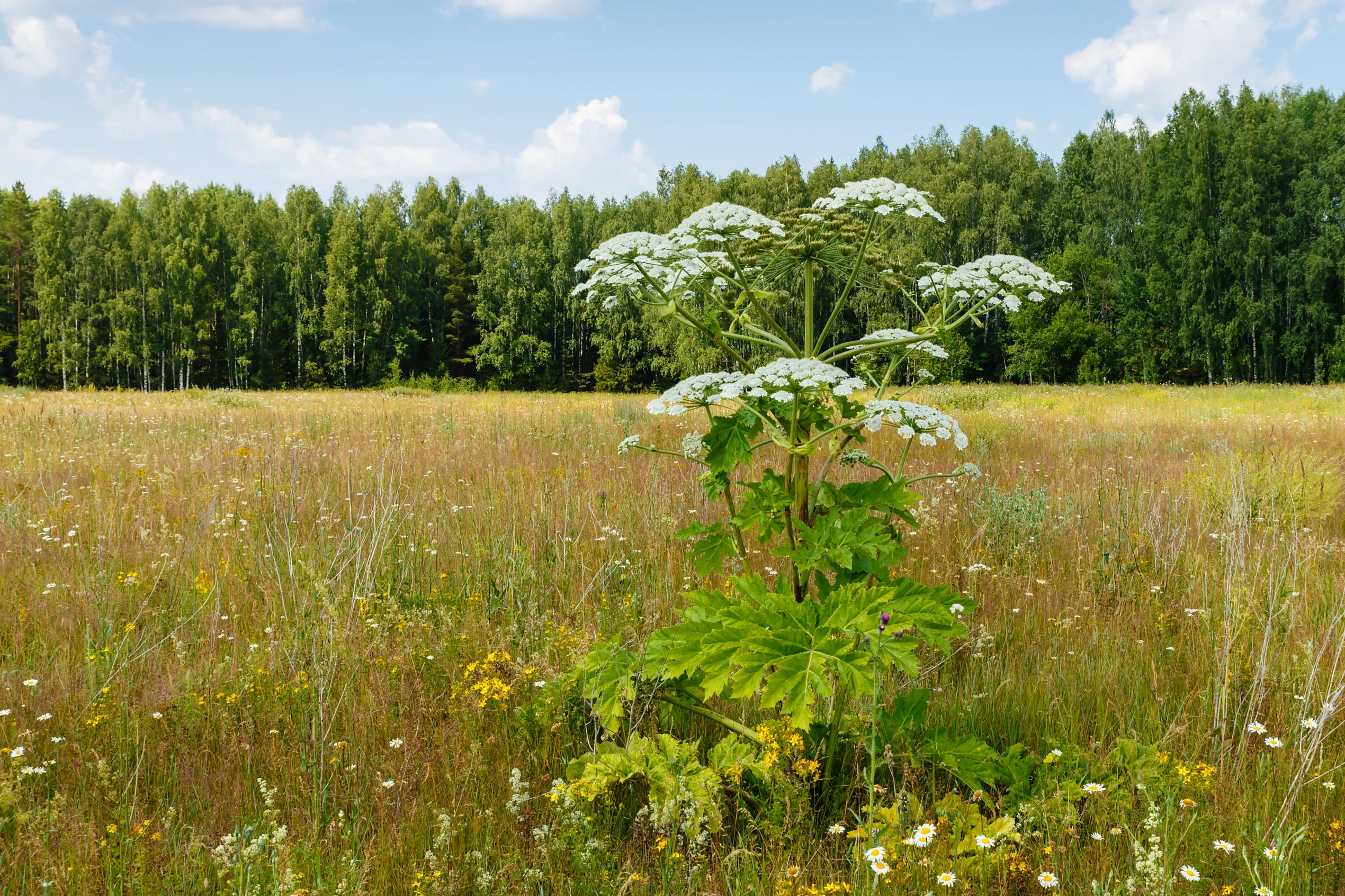
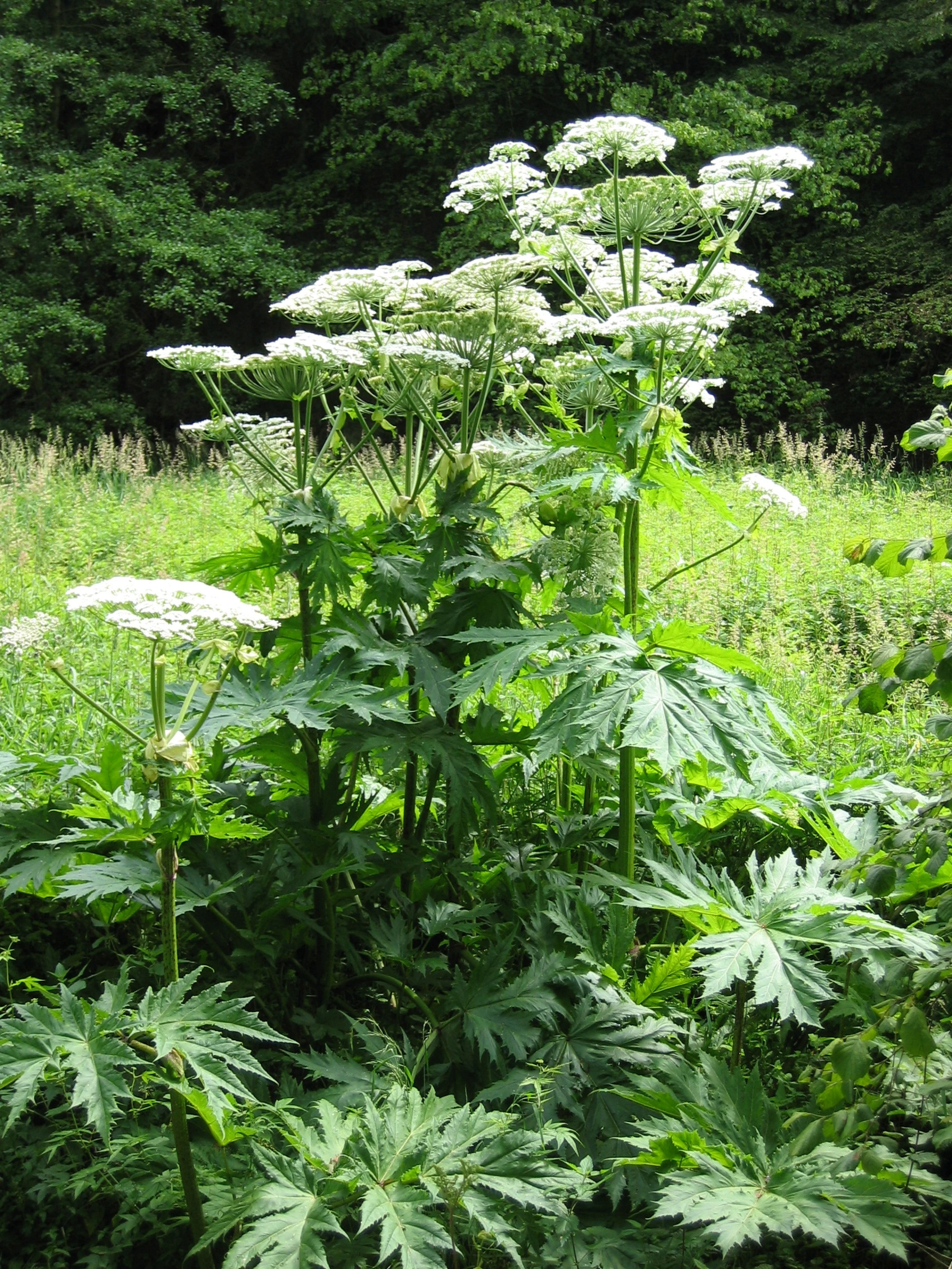
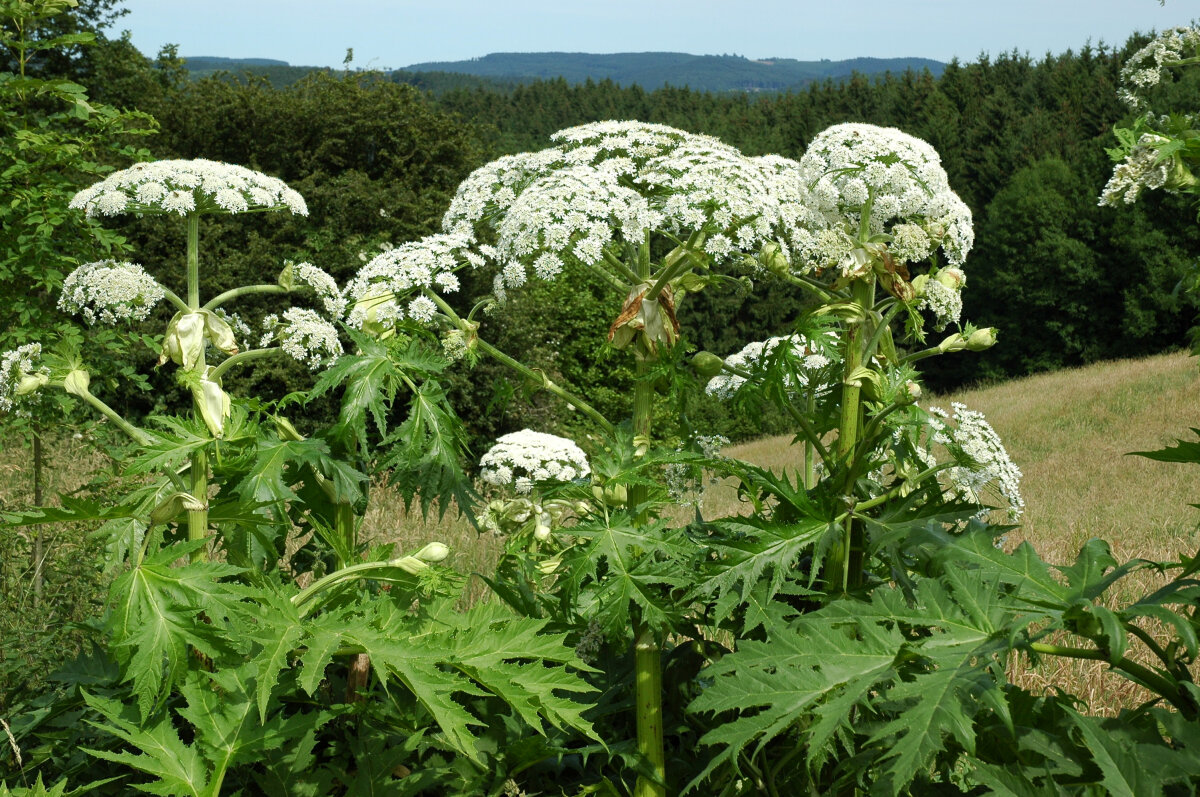
Giant hogweed is a perennial herbaceous plant with very large leaves that can grow up to four metres tall. The plant originally comes from the Caucasus and is an invasive alien species in Europe.
Giant hogweed produces up to 30,000 seeds and therefore spreads very quickly. According to the "Union list of invasive species", it is already considered "established" and has also increasingly spread in the Oberbergischer Kreis.
Its fruits ripen towards the end of June/beginning of July and, depending on wind conditions, can spread up to 100 metres. The plant then dies. The plant originally comes from the Caucasus and was used at the end of the 19th century as a decorative ornamental plant for gardens and parks. Today it is frequently found along paths, meadows and forest edges, and on the banks of waterways.
Giant hogweed spreads mainly via flowing water, but also through wind, disposal of garden waste in the countryside, and by clinging to animal fur or car tyres.
The seeds remain viable for eight to ten years.
Its site requirements are minimal and it has no natural enemies.
Native plant species are displaced by its rapid growth and large leaves.
Is giant hogweed dangerous?
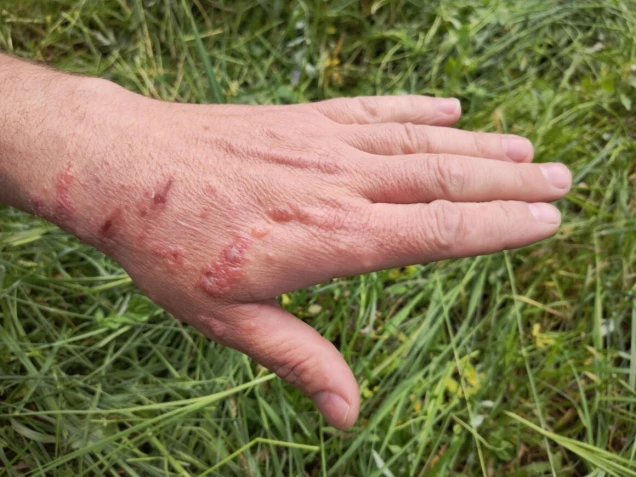
The entire plant, especially its sap, contains phototoxic substances. Contact combined with sunlight can cause severe skin inflammation with significant blistering to develop after 24 to 48 hours.
The resulting skin changes resemble third-degree burns and can even require hospital treatment. They heal only slowly and may leave scar-like, streak-shaped pigmentation.
Since children often use the plant's hollow stems as blowpipes when playing, eye injuries are also a consequence that should not be overlooked.
Giant hogweed poses a threat to native plant life, as its vigorous growth and large leaf mass crowd out other species. This becomes particularly problematic in specially protected areas (e.g. nature reserves).
Who is responsible for controlling giant hogweed?
In principle, every owner, whether private or municipal, is responsible for their property and therefore also bears the duty of traffic safety. Accordingly, removal should be arranged, particularly where there is a potential hazard to third parties.
If the occurrence of giant hogweed poses a health hazard, for example near schools or daycare centres, the local regulatory authorities, i.e. the towns and municipalities, are responsible as part of hazard prevention.
For land owned by public authorities, there is an increased obligation to take into account the objectives of nature conservation and landscape management where ecosystems are endangered, species displaced, or special habitats affected. In the Oberbergischer Kreis, the Oberberg Biological Station (BSO) ensures that these objectives are observed, particularly in nature reserves.
Naturarena Bergisches Land GmbH ensures that giant hogweed does not spread unchecked along the qualified hiking trails of the Bergisches Wanderland.
In addition, the water boards also combat giant hogweed along rivers and streams within the limits of their resources.
How can the spread of giant hogweed be reduced?
Especially for already widespread or established invasive species, which include giant hogweed, it is almost impossible to remove them completely from nature. Accordingly, when implementing measures, the proportionality of the costs must be examined in particular. Furthermore, sustainable prevention of the spread can only be achieved if the necessary measures are designed for the long term and carried out in concerted action with neighbouring districts or even with neighbouring federal states.
It is therefore necessary to support cross-regional measures with state funds, if not federal funds.
Within the scope of its possibilities, the Oberbergischer Kreis supports voluntary initiatives to control giant hogweed, provided these measures are promising. The Office for Planning, Development and Mobility accepts corresponding requests.
Below are some tips that can reduce the further spread of the plant:
-
remove giant hogweed cultivated as an ornamental plant in the garden, in particular preventing it from setting seed; the most effective method is digging out the turnip-like tuber (at least 15 cm deep)
-
dispose of cut flower and fruit heads via residual waste
-
do not dispose of garden waste in the countryside
-
do not establish new plantings of the plant
-
do not scatter seeds when harvesting and transporting fruit heads
-
regular grazing with cattle, sheep or goats (where possible)
What protective measures should be taken before contact with giant hogweed?
-
Wear protective clothing (long trousers, long sleeves, gloves, face protection, possibly safety goggles).
-
The plant should be removed under overcast skies or in rain, not in strong sunshine.
-
Face and hands can additionally be protected with a high-SPF sunscreen.