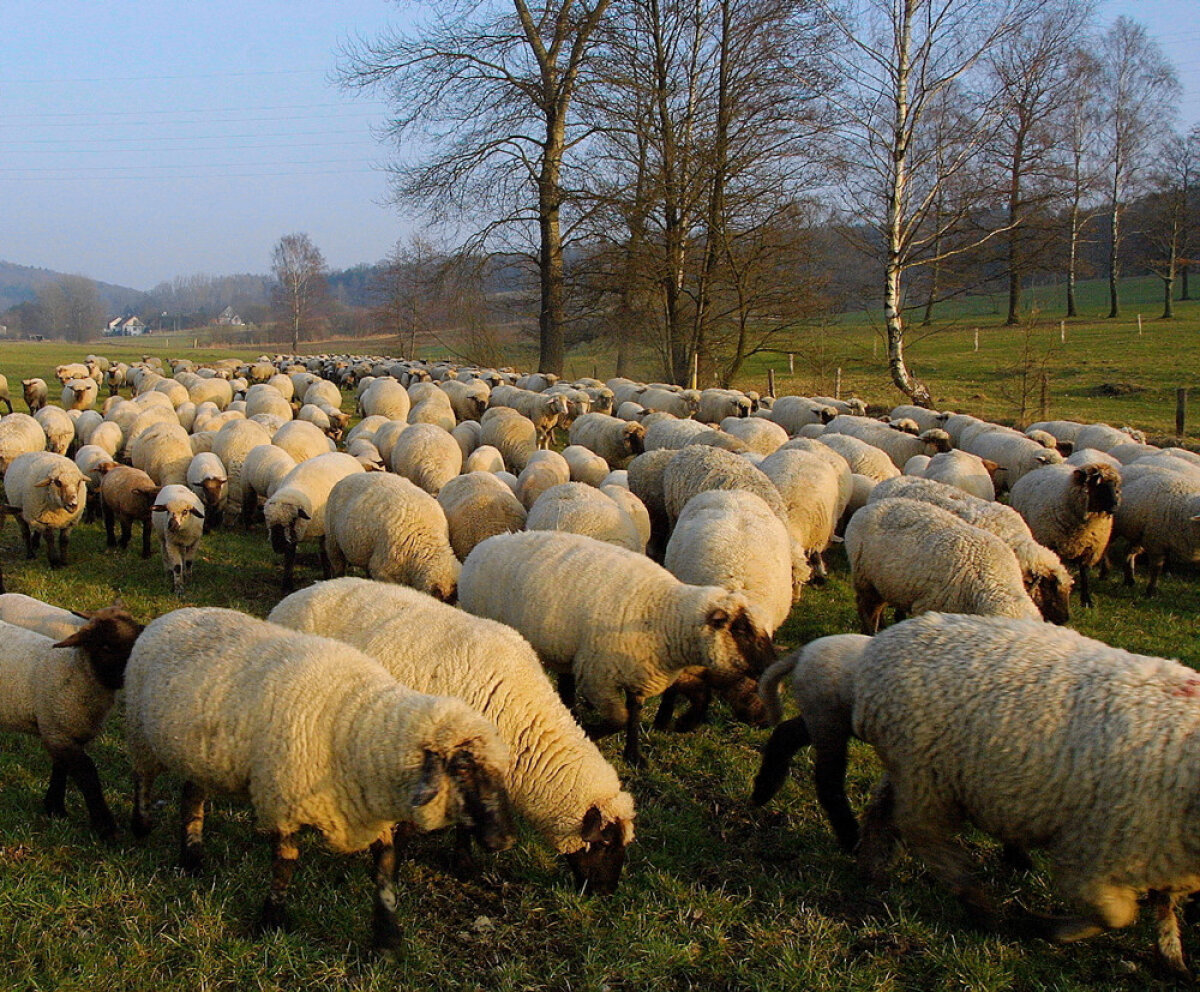
 copyright: © Philipp Ising
Bluetongue disease
This page was translated from German using artificial intelligence. The translation may contain errors or inaccuracies. In case of doubt, the German original version prevails.
Updated: 24.02.2026
Due to various outbreaks in Rhineland-Palatinate and North Rhine-Westphalia, the entire Oberbergischer Kreis area is within the restriction zone.
The Friedrich-Loeffler-Institute has created an interactive map for this purpose.
Additional movement conditions regarding BTV-8 must be met for susceptible animals from these areas. Susceptible animals include sheep, goats, cattle, and other ruminants, as well as New World camelids.
There you can find the currently applicable movement restrictions as well as the forms to be used for the movement of susceptible animal species.
Vaccinations
A vaccination against BTV-8 is recommended, as well as the continuation of vaccinations against BTV-3 to avoid animal suffering and economic losses.
General information on bluetongue disease
Bluetongue disease is not transmitted from animal to animal but by infected biting midges, known as culicoides, to ruminants. The current weather does not favor the activity of the midges.
Ruminants such as cattle, sheep, goats, wild ruminants, and camelids are susceptible to infection with the bluetongue virus (BTV).
The pathogen of bluetongue disease is completely harmless to humans.
Animals react with varying degrees of symptoms to the infection. Typical symptoms include elevated body temperature, apathy, increased salivation with foam formation in front of the mouth, and lameness. In pregnant animals, the disease can lead to abortion. The swelling and discoloration of the tongue that gives the disease its name is very rare and only expected in highly susceptible sheep breeds.
Owners of susceptible animals must register their livestock - if not already done - with the Animal Disease Fund. All owners of susceptible animal species, especially cattle, sheep, and goats, are urged to closely monitor their animals and consult the responsible farm veterinarian for clarification if symptoms suggestive of BTV infection occur. After examining the animals, the farm veterinarian reports the suspected bluetongue disease to the veterinary office.
Blood samples are taken for clarification and examined in the state laboratory.
Effective and approved vaccines are available against BTV-8. To protect animals from severe clinical diseases and to avoid trade barriers, it is recommended to vaccinate susceptible animals against BTV-8.
It should also be noted that serotype 3 of the virus is still present throughout the entire federal territory. The Ministry of Agriculture and Consumer Protection of the State of North Rhine-Westphalia therefore urgently recommends continuing vaccinations against BTV-3 in susceptible animals to prevent unnecessary animal suffering and minimize animal losses. Both primary immunizations and booster vaccinations of animals already vaccinated last year should be completed by May at the latest.
For specific questions about vaccination, owners should contact their farm veterinarians.
Information on subsidies can be found on the homepage of the Animal Disease Fund of North Rhine-Westphalia.
Further links
Dr. Horst Wehrle
