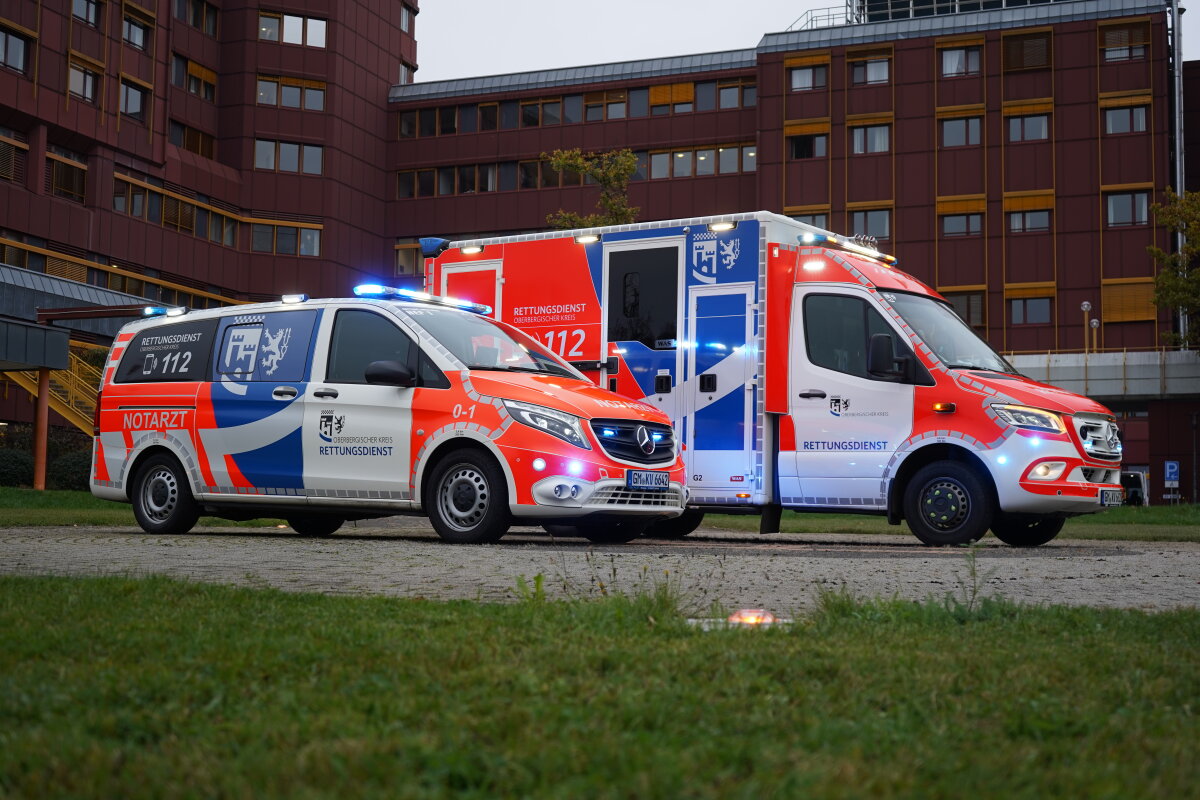
 copyright: Sebastian Bode
Fleet
To handle our everyday as well as extraordinary operations and tasks, we maintain a powerful and diverse fleet.
This page was translated from German using artificial intelligence. The translation may contain errors or inaccuracies. In case of doubt, the German original version prevails.
Ambulance (RTW)
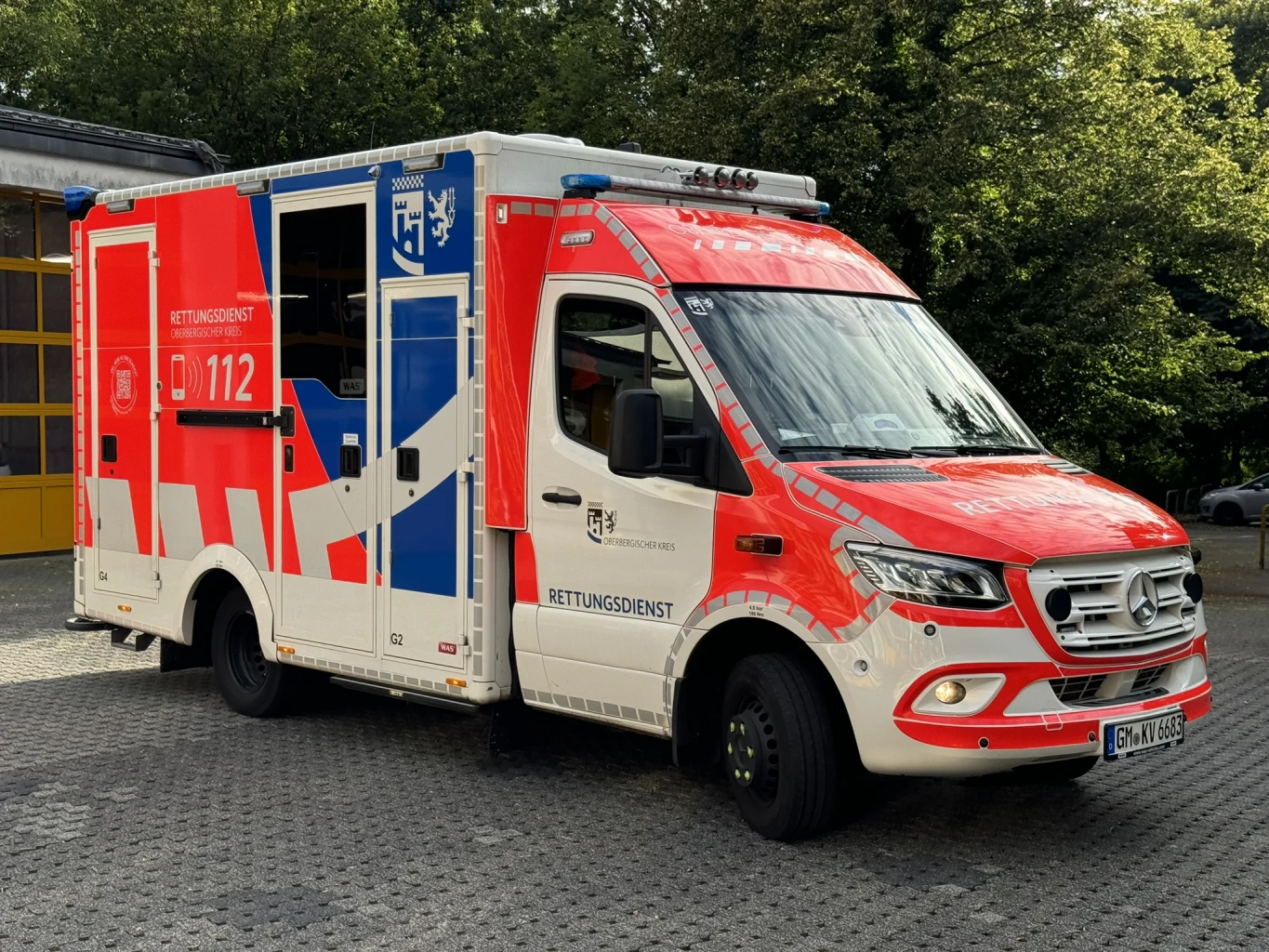
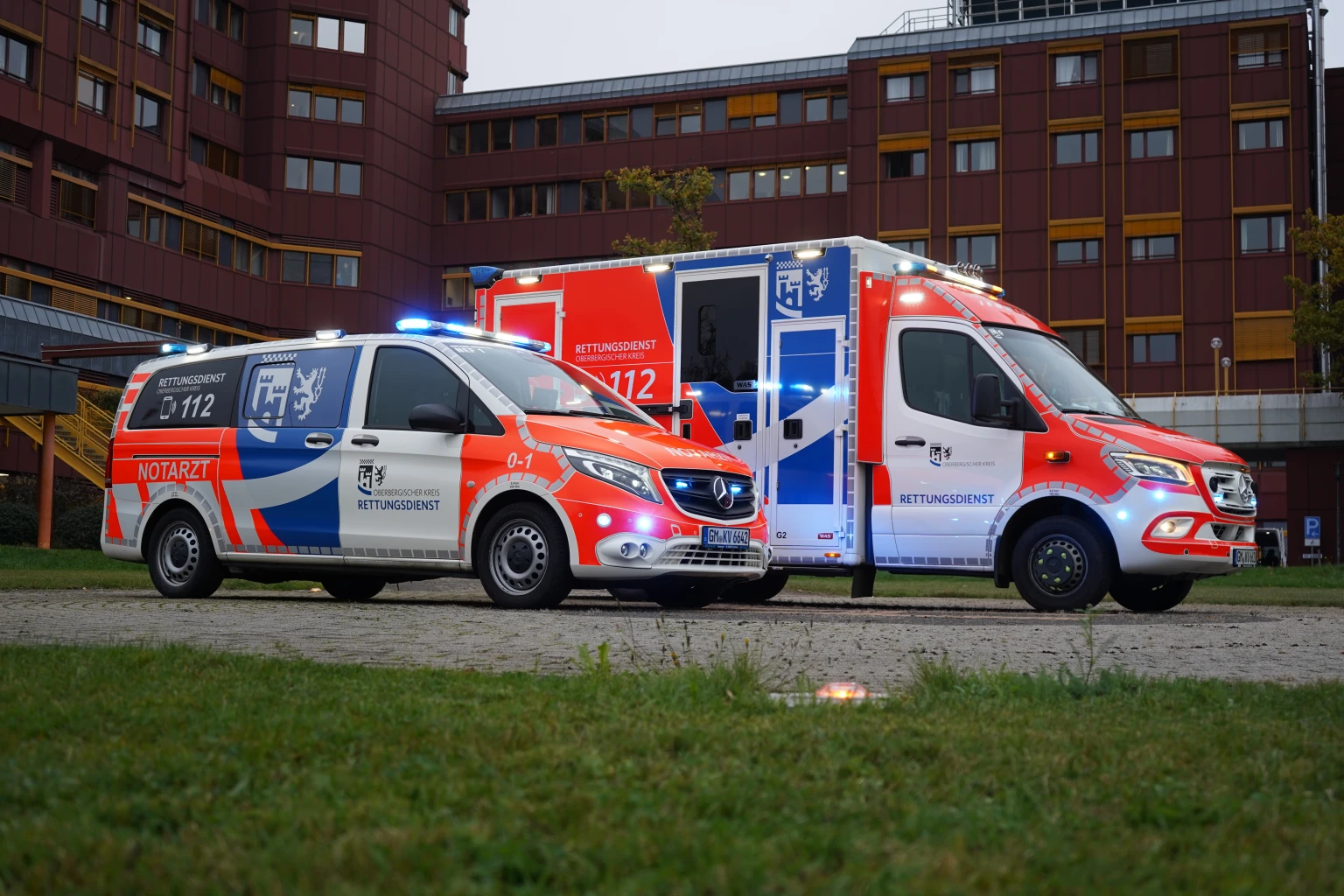
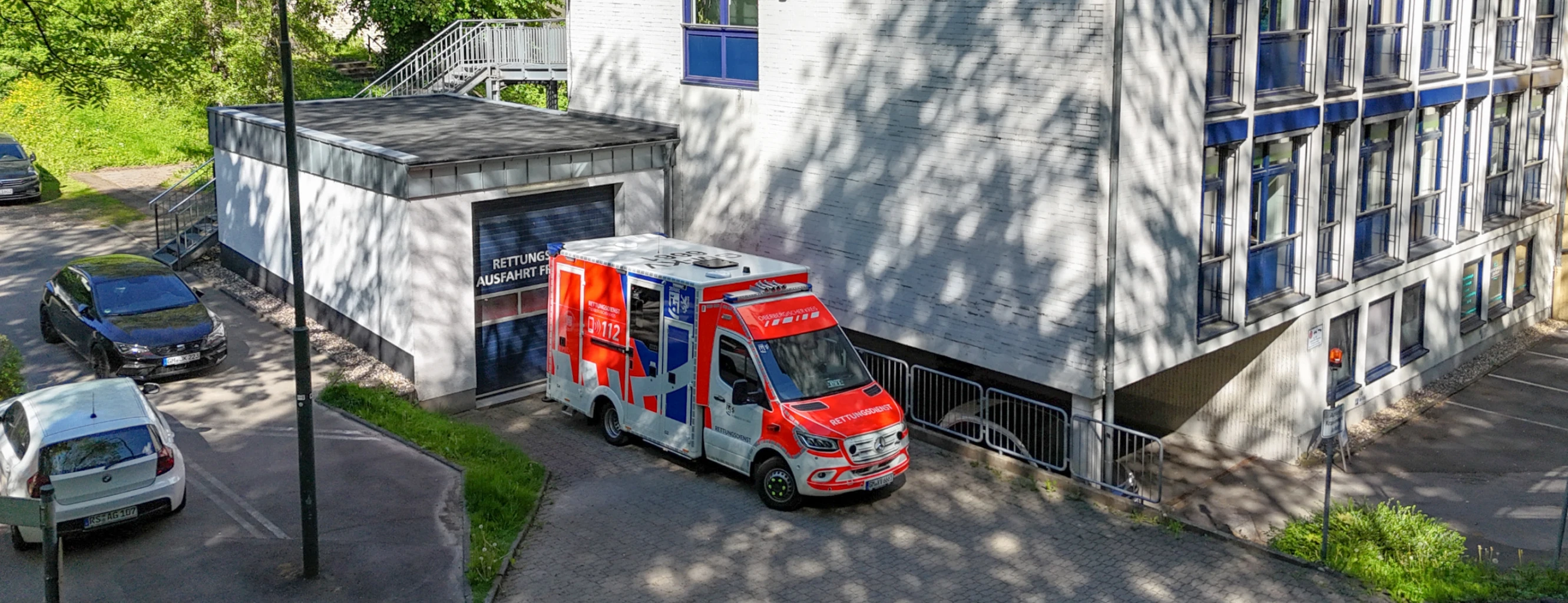
The ambulance (RTW) is a vehicle designed for emergency medical services, patient care, monitoring, and transportation of emergency patients. By definition, these are patients whose acute life-threatening condition is either present, expected, or cannot be ruled out. For this purpose, the RTW is equipped with extensive medical supplies. Currently, 19 ambulances are deployed in the emergency service area of the Oberbergischer Kreis. Six RTWs are permanently kept as technical reserves. The ambulances are staffed by at least one paramedic as the transport leader and one emergency medical technician. The vehicles are Mercedes-Benz Sprinters with bodywork by WAS and GSF.
Ambulance (KTW)
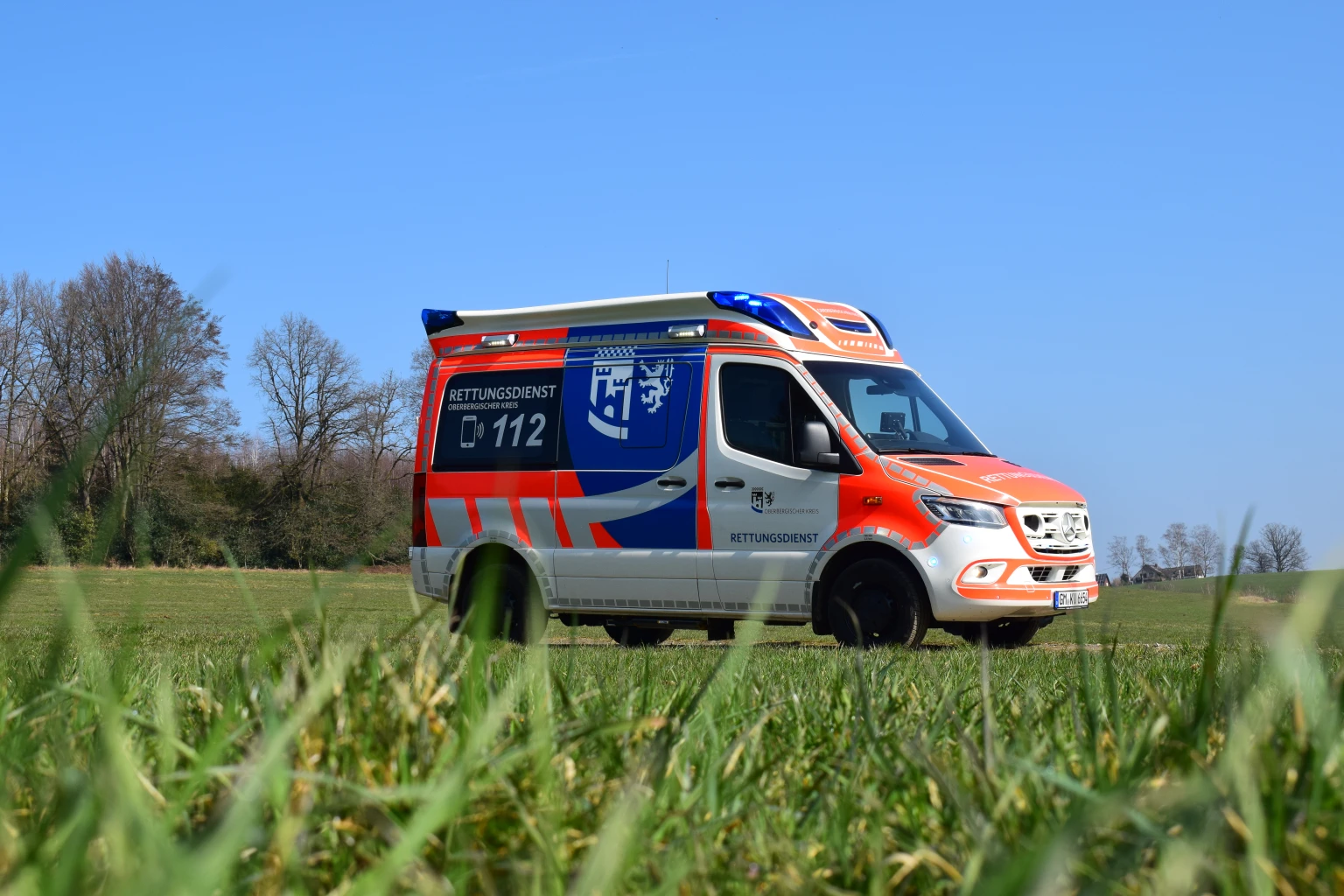
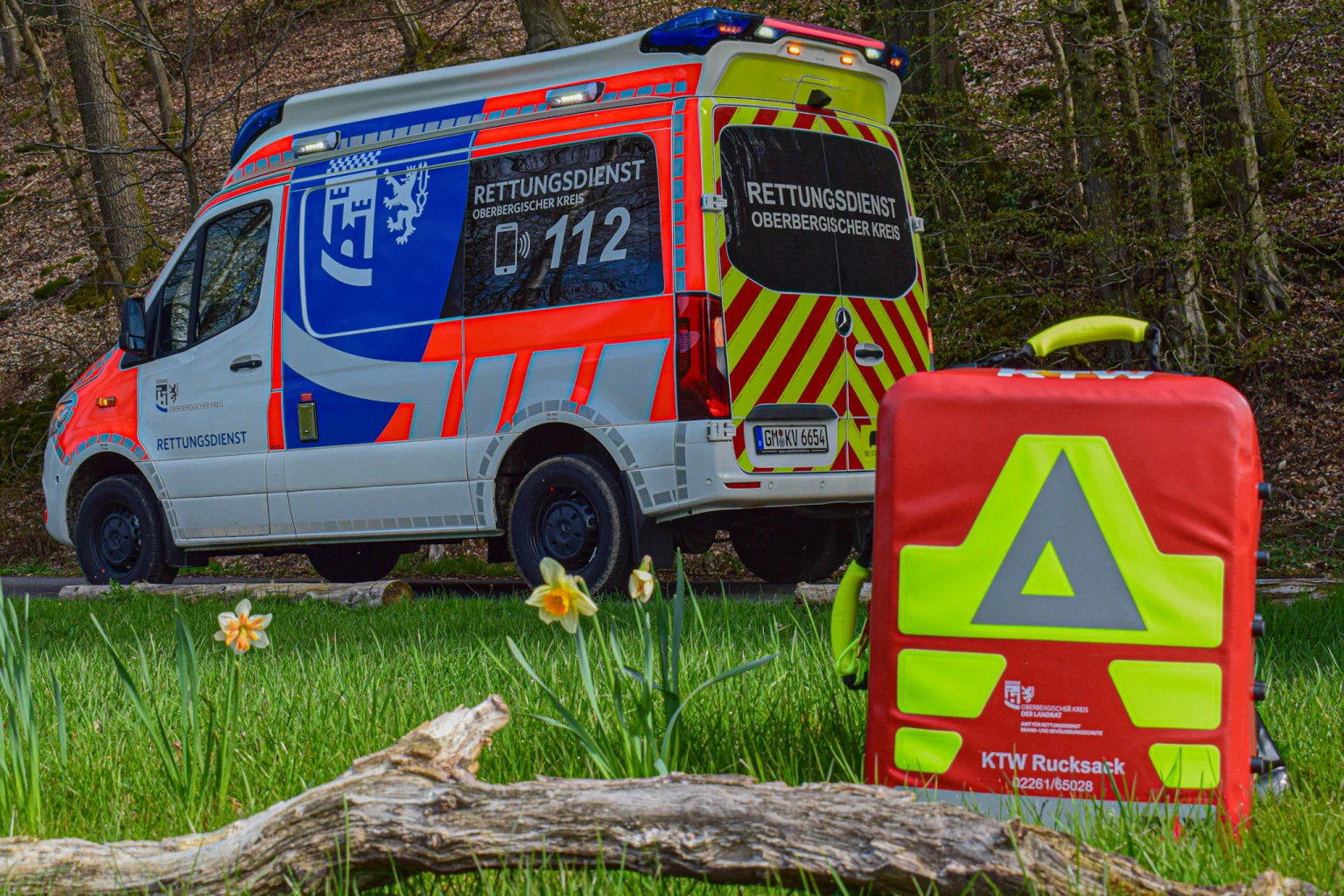
The ambulance (KTW) is a vehicle for non-urgent transportation of injured or sick individuals under the care of qualified personnel. Reasons for deployment include hospital transfers, return trips from hospitals, dialysis trips, or transport to general practitioners. Due to their extensive equipment, these vehicles can also be deployed as "first responders" for emergency calls, bridging the time until other emergency resources arrive. Currently, 16 ambulances are in operation in the Oberbergischer Kreis, divided into various shifts to ensure 24-hour coverage. Three fully equipped KTWs are permanently kept as technical reserves.
Emergency Doctor Vehicle (NEF)
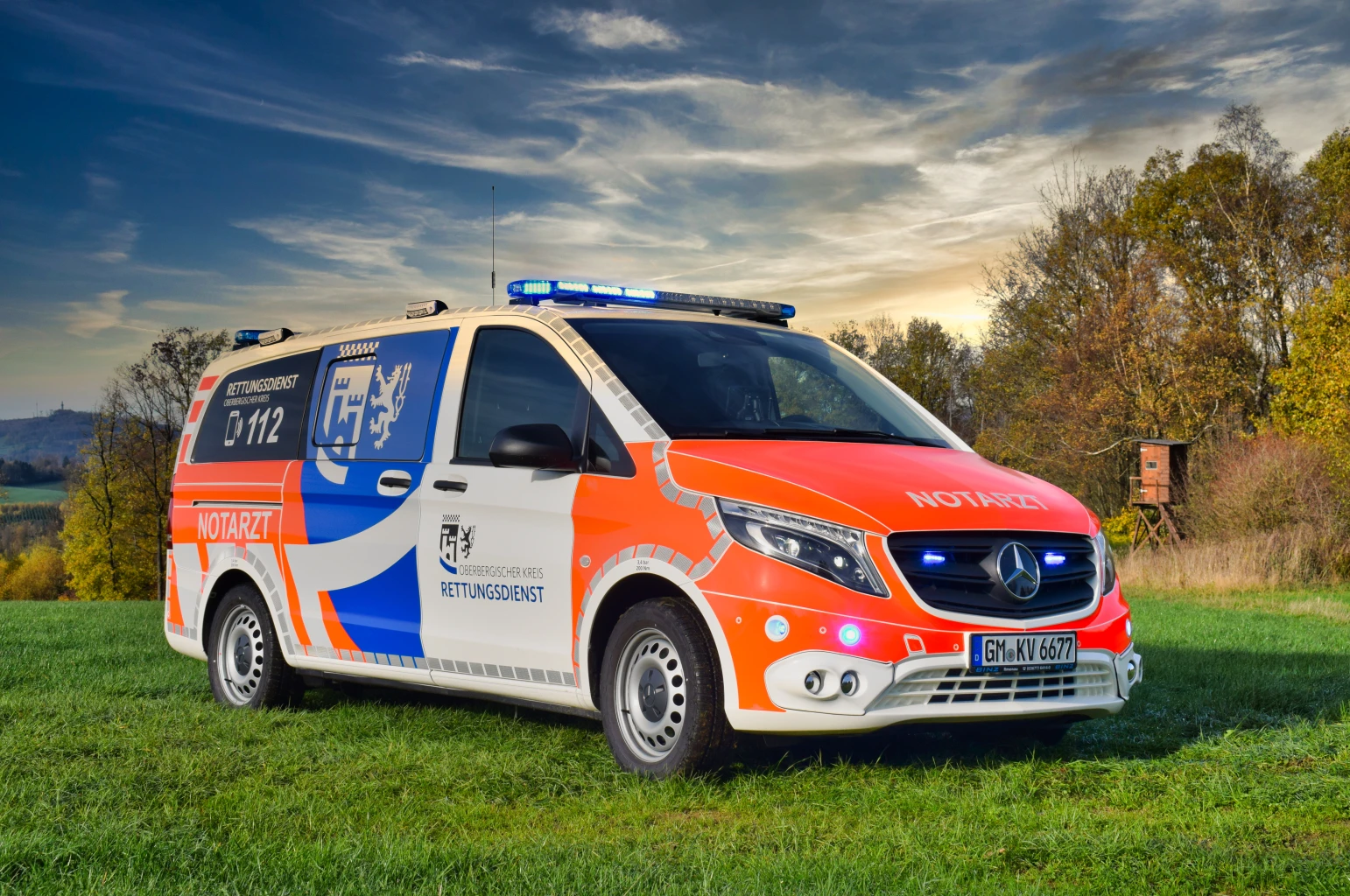
The emergency doctor vehicle (NEF) serves as a transport vehicle for the emergency doctor to the scene of the incident. The vehicle is equipped with extensive medical equipment, which complements the materials on the RTW. Additionally, it carries materials for managing major damage incidents. Currently, there are seven identical emergency doctor vehicles in operation in the rescue service area of the Oberberg district, which are available in 24-hour operation. Three additional identical NEFs are permanently available as a technical reserve. The emergency doctor vehicles are staffed with a paramedic with additional qualification as a "group leader" and a doctor with the additional designation of "emergency medicine."
Command Vehicle OrgL (KdoW)
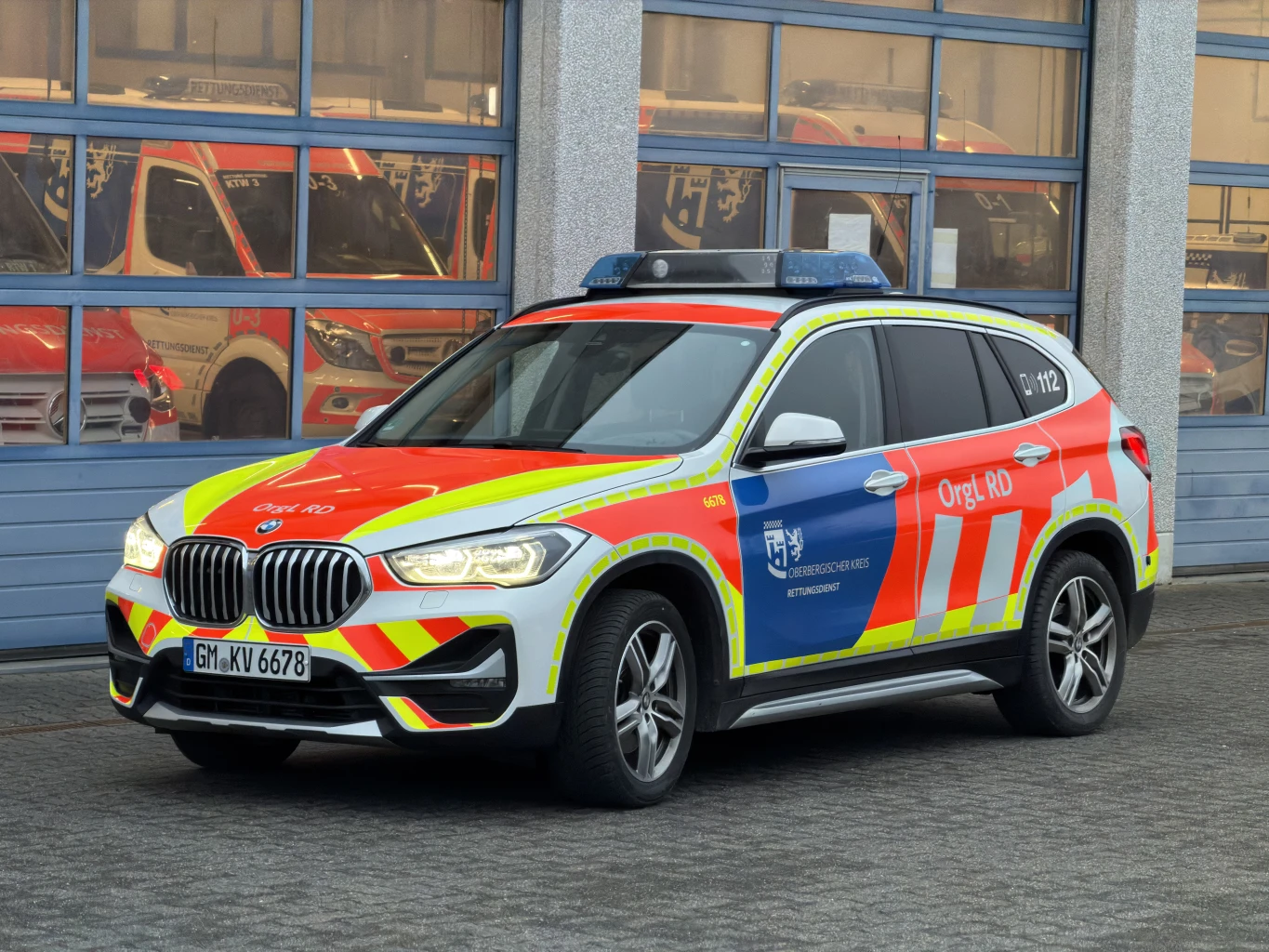
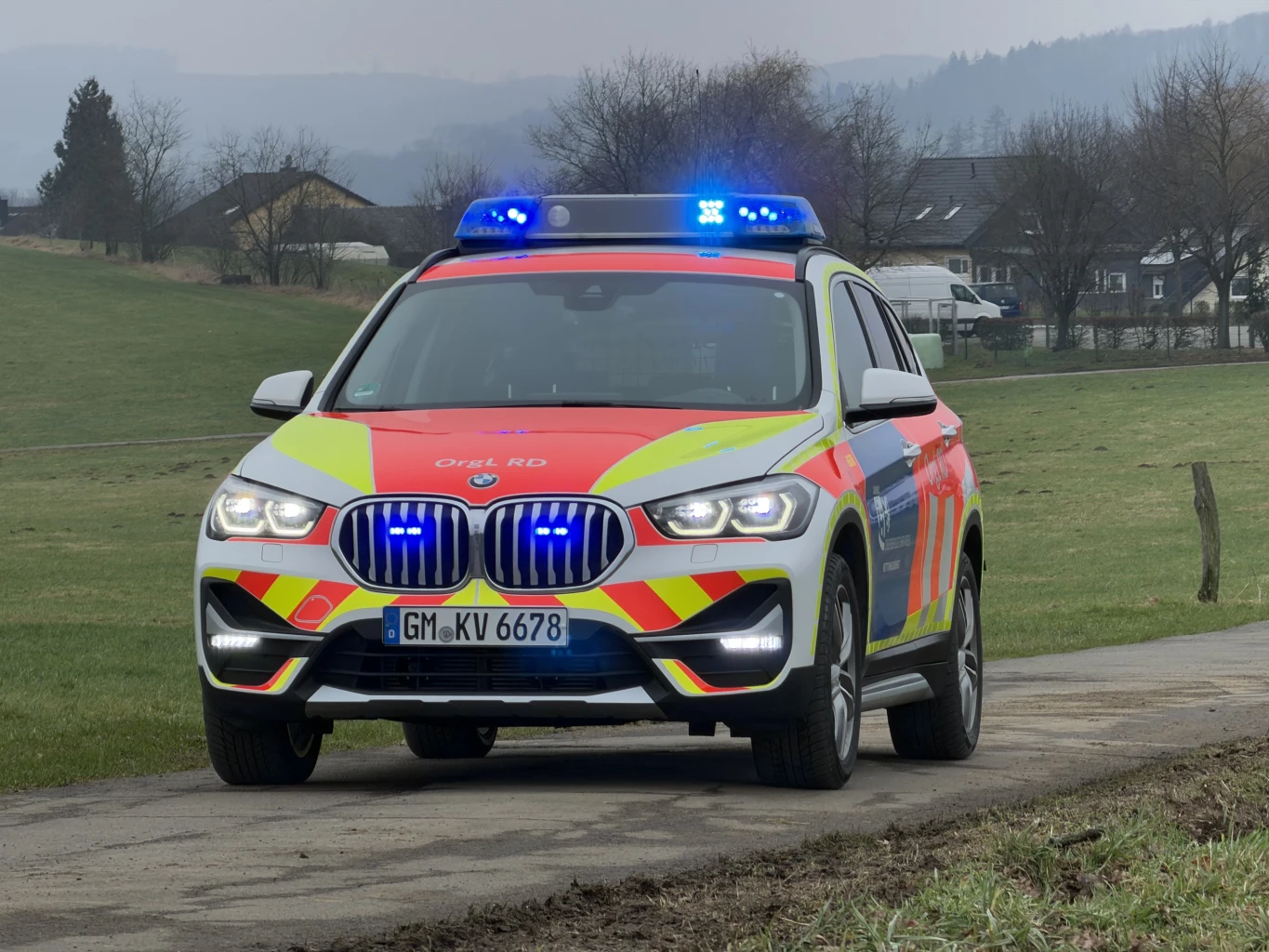
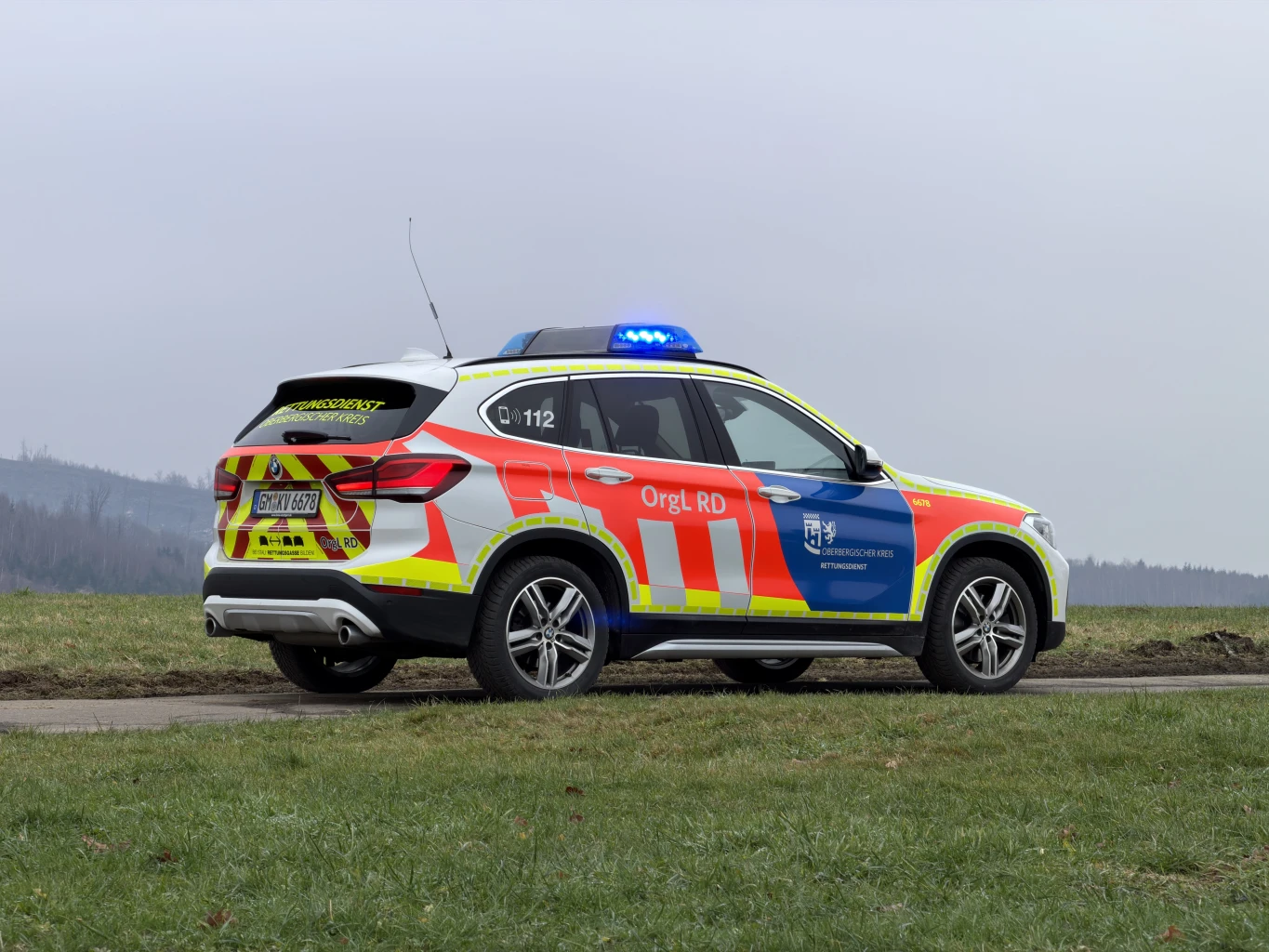
The command vehicle serves as the emergency vehicle and transport for the organizational leader of the rescue service (OrgL RD) to the scene of the incident. In special operational scenarios or major damage events, the OrgL takes on important coordinating and leading tasks. In addition to extensive leadership equipment, the emergency vehicle also carries materials for initial medical care.
Command Vehicle SEG (KdoW)
The command vehicles (KdoW) serve as emergency vehicles for the rapid response team staff. Among other things, they are staffed by the on-duty C-service. These specially trained staff assist in selected operational scenarios and major damage incidents, support the leadership team, or staff the incident command vehicle. The command vehicles are equipped with extensive operational leadership materials.
Incident Command Vehicle (ELW)
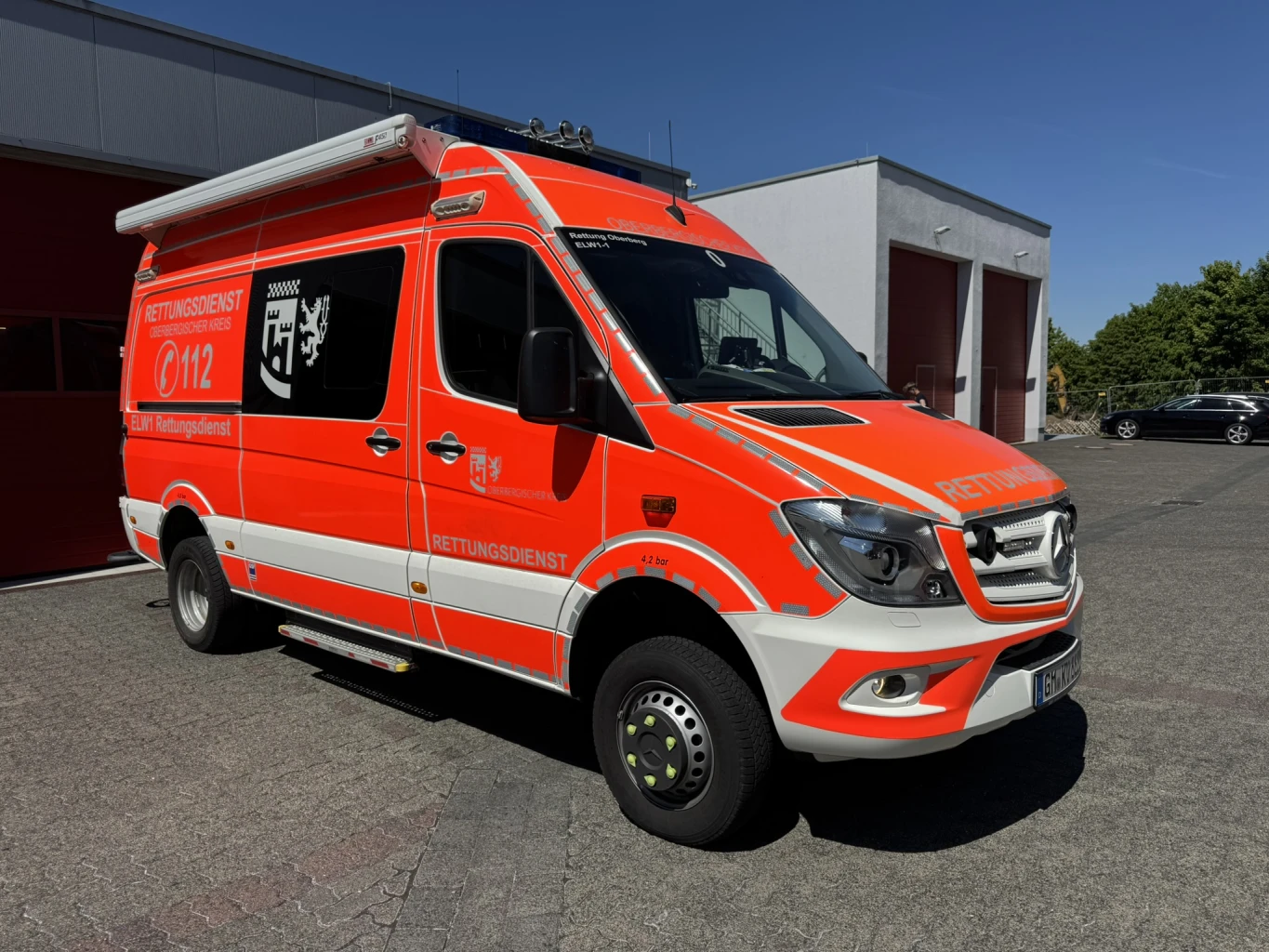
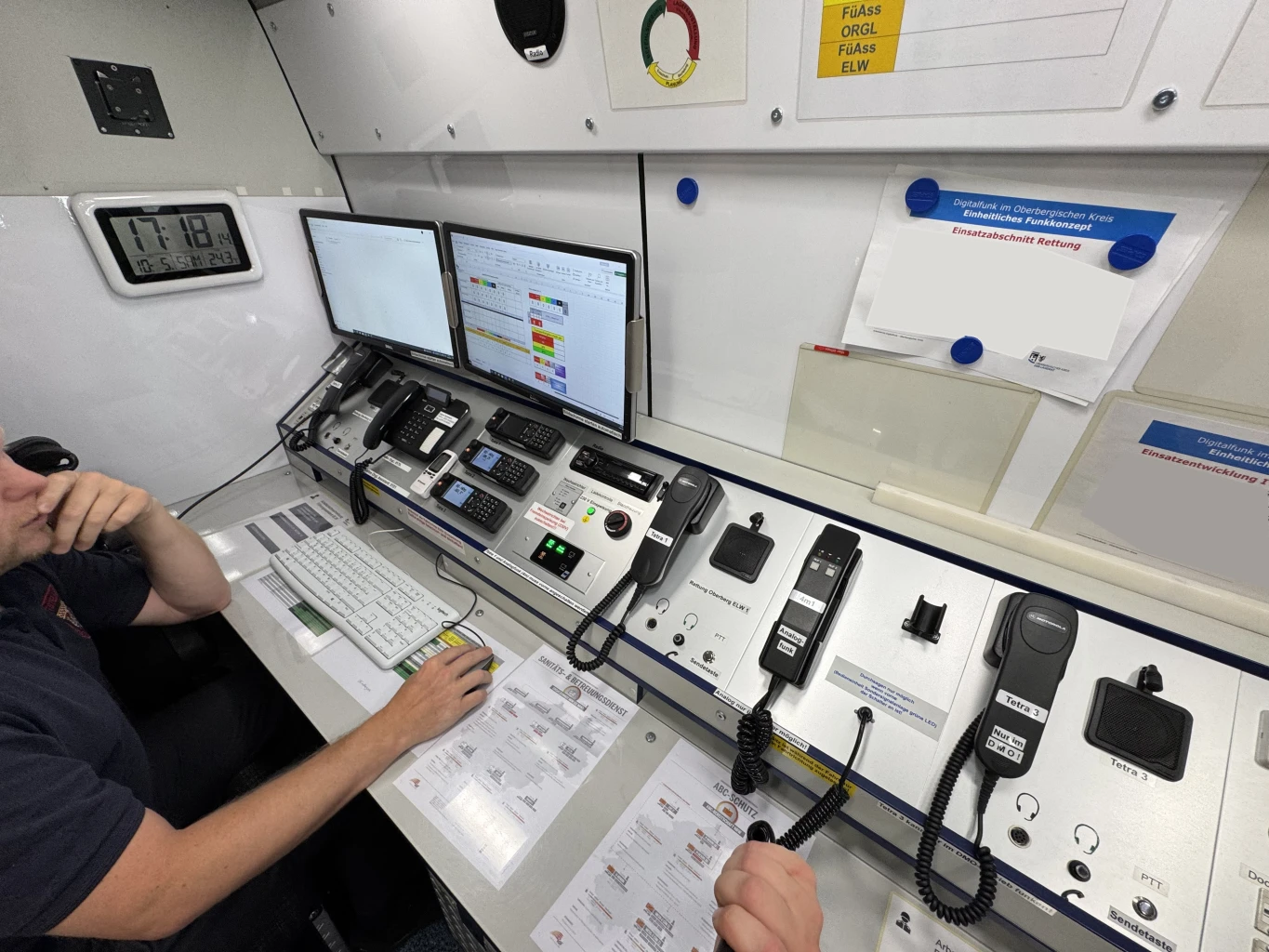
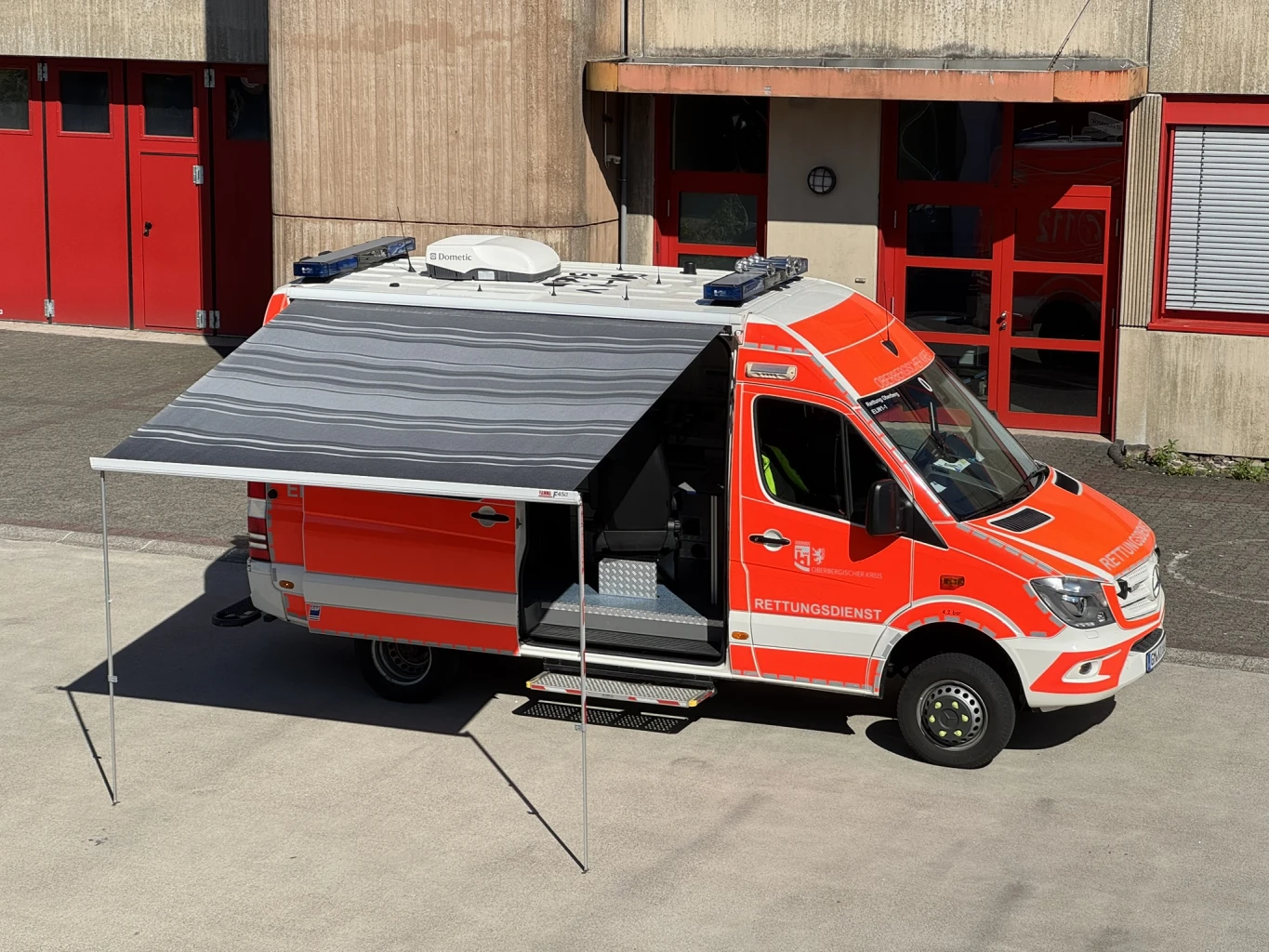
The incident command vehicle (ELW) is used as the central command vehicle of the rescue service in special operational scenarios or larger damage events. It serves as a working tool for the incident commander for structured and efficient on-site management. The vehicle is equipped with extensive materials for operational coordination and features a spacious working area with modern radio and computer technology. The ELW is staffed by members of the rapid response team rescue service (SEG RD) and transported to the scene. Depending on the operational scenario, it is operated together with the organizational leader of the rescue service (OrgL RD), the senior emergency doctor (LNA), as well as command assistants of the rapid response team rescue service (SEG RD).
Multi-Purpose Vehicle (MZF)
The multi-purpose vehicle (MZF) serves the rapid response team (SEG) primarily as a transport vehicle for emergency personnel and as a mobile work and command station. Additionally, it functions as a towing vehicle for the equipment trailer of the SEG. The vehicle has 7 seats, a fixed workstation with radio and IT connection, and a modularly designed rear area. There, various operational materials are loaded, which are needed to handle major damage incidents and special operational situations.
Equipment Trailer SEG
A variety of materials for managing major damage incidents are loaded on the equipment trailer of the rapid response team. The use of modular roll containers allows the load to be flexibly adapted to the respective operational situation. The trailer is transported to the scene by the multi-purpose vehicle and used on-site by the rapid response team staff.
Logistics Vehicle (GW-L)
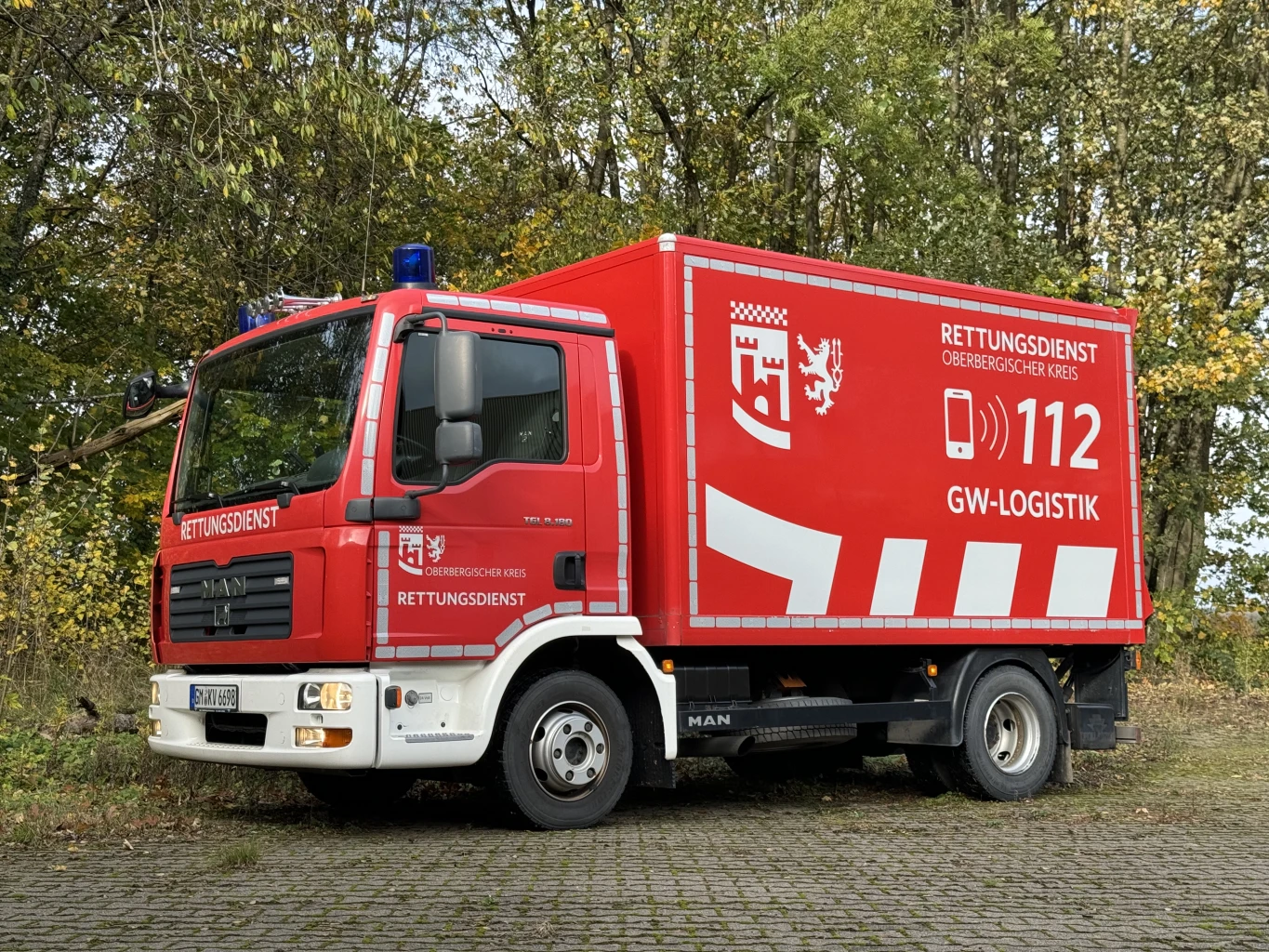
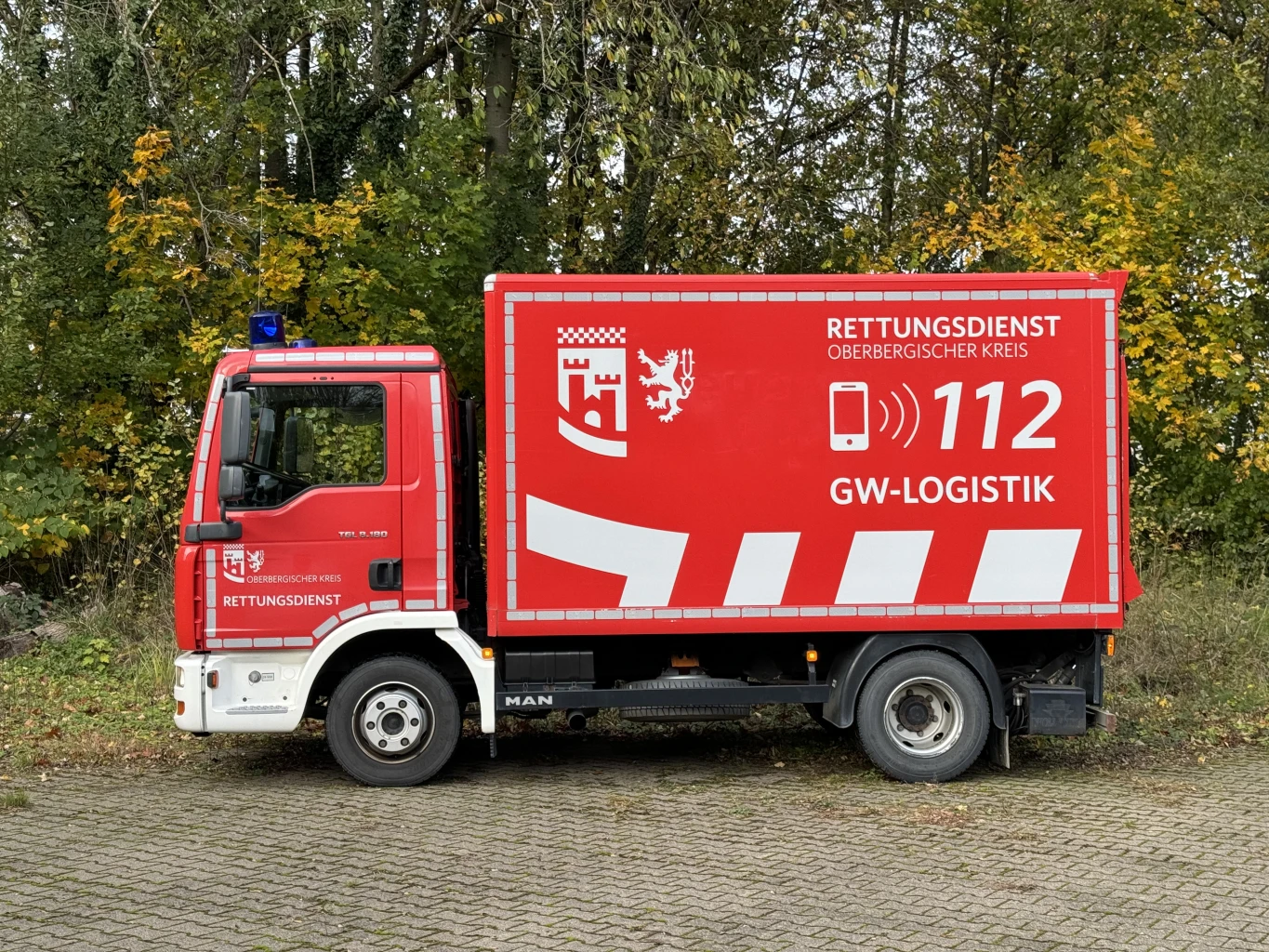
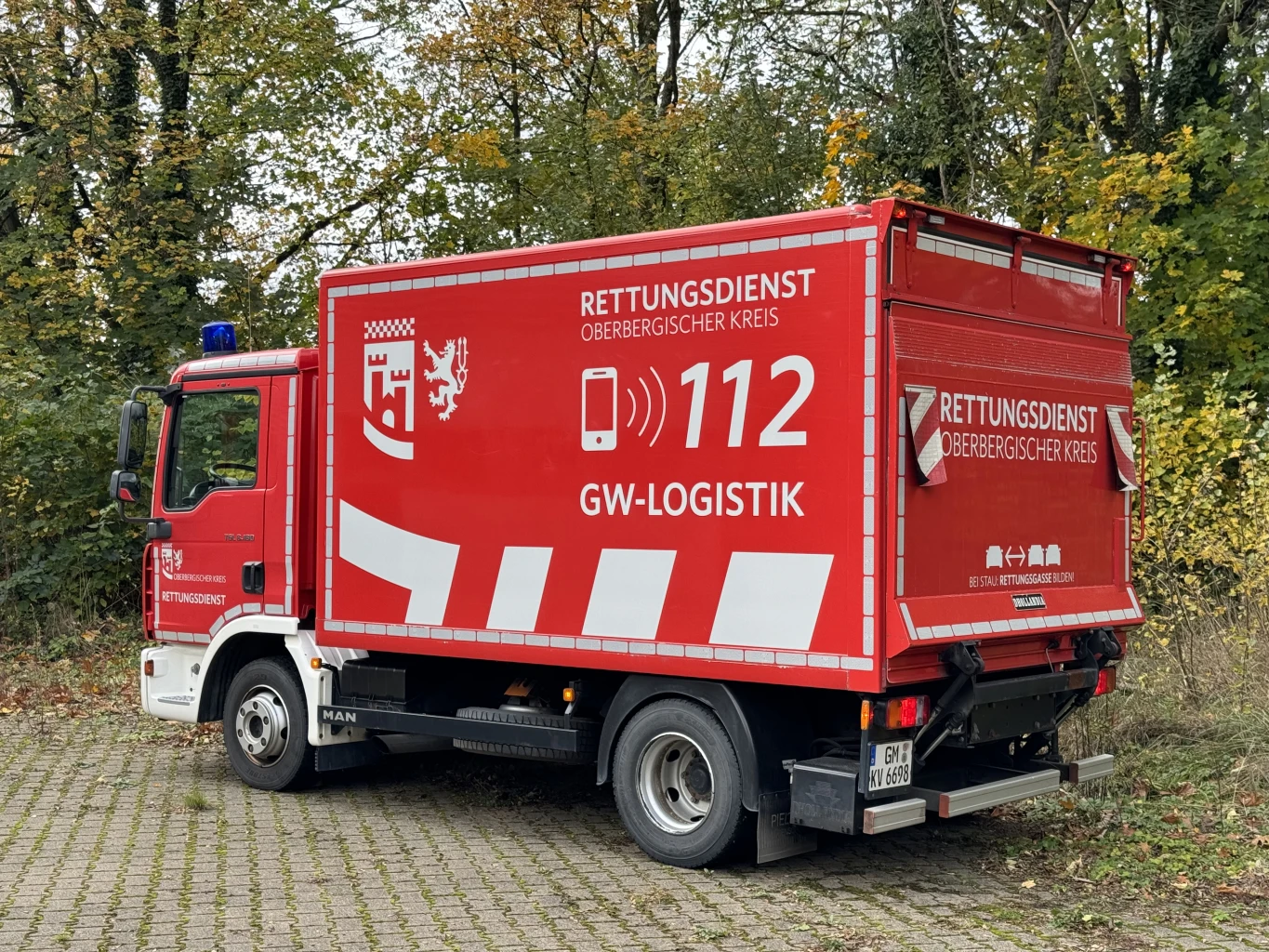
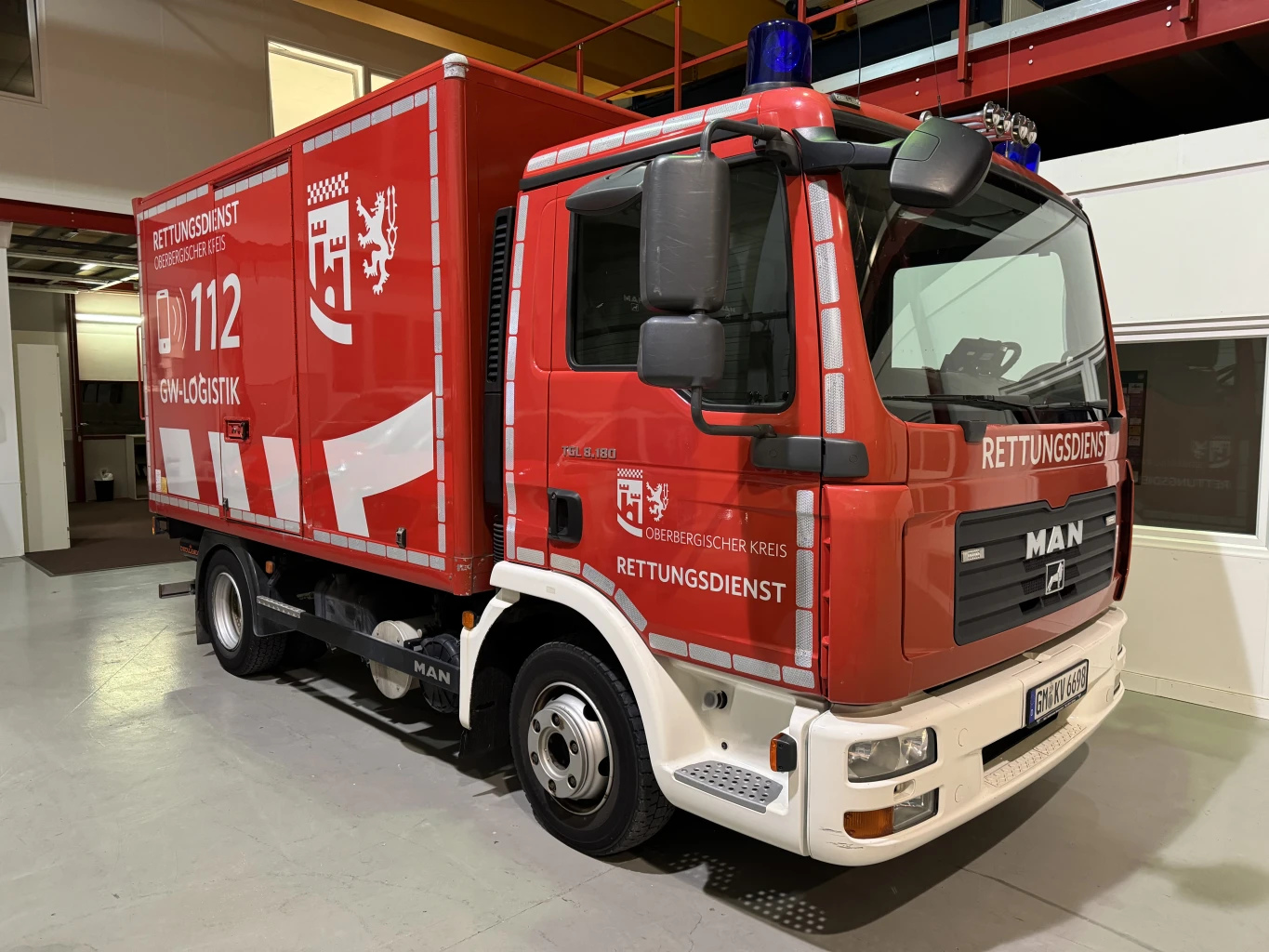
The logistics vehicle (GW-L) is used by our rescue service department to supply locations with medical consumables and other material needs. The vehicle is equipped with a tail lift, a pallet truck, and various logistical aids for this purpose.
Clinomobile
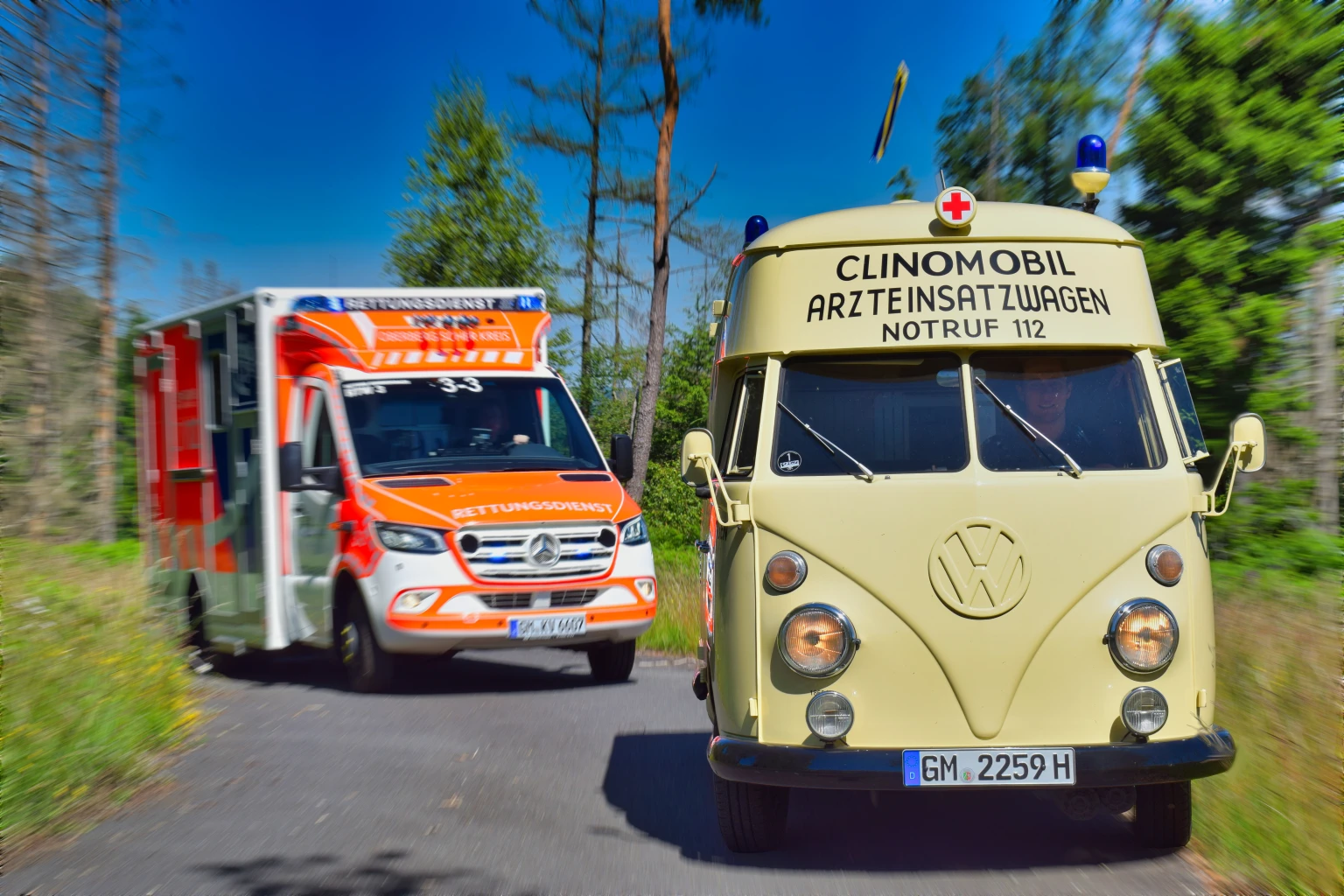
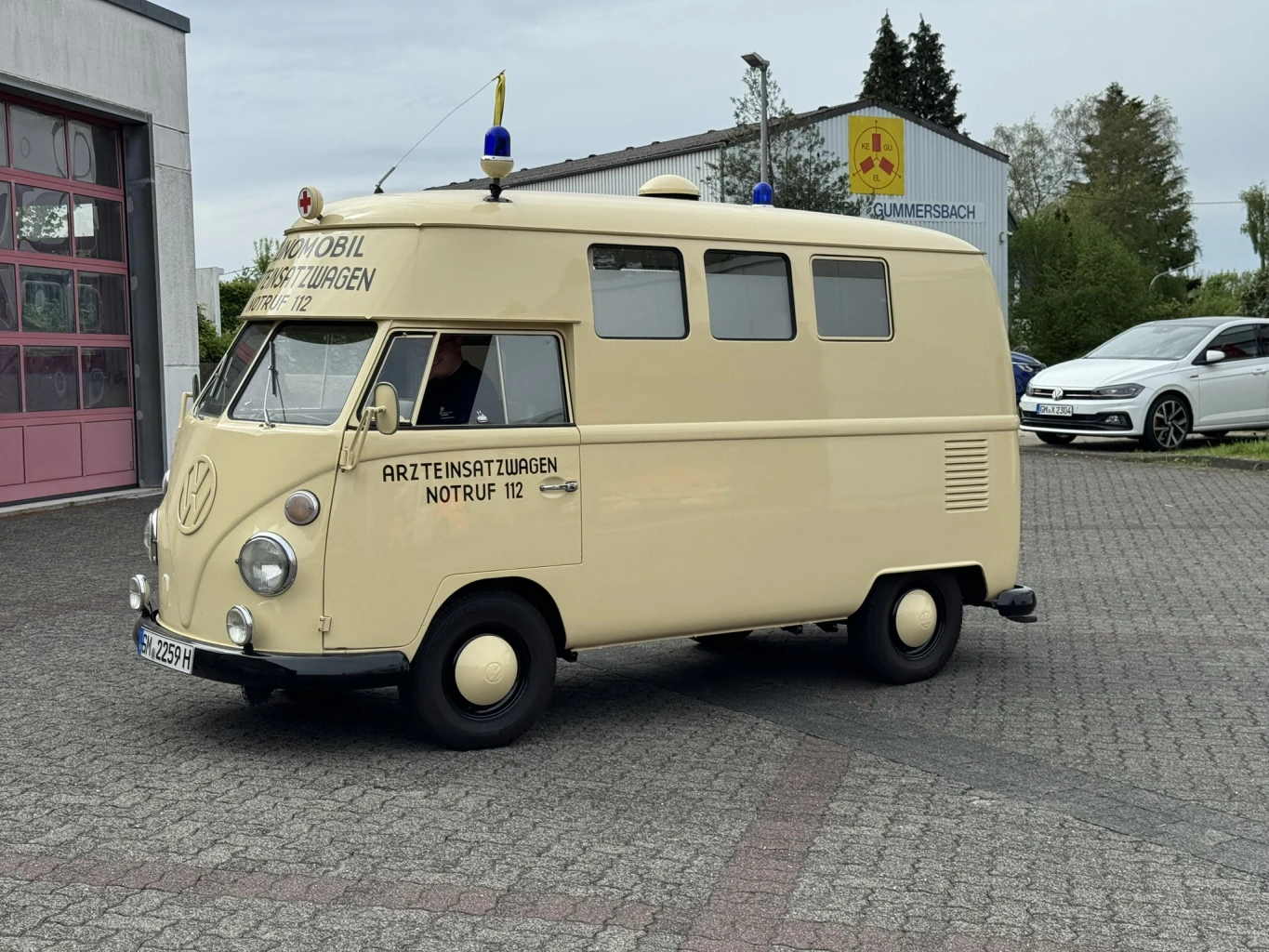
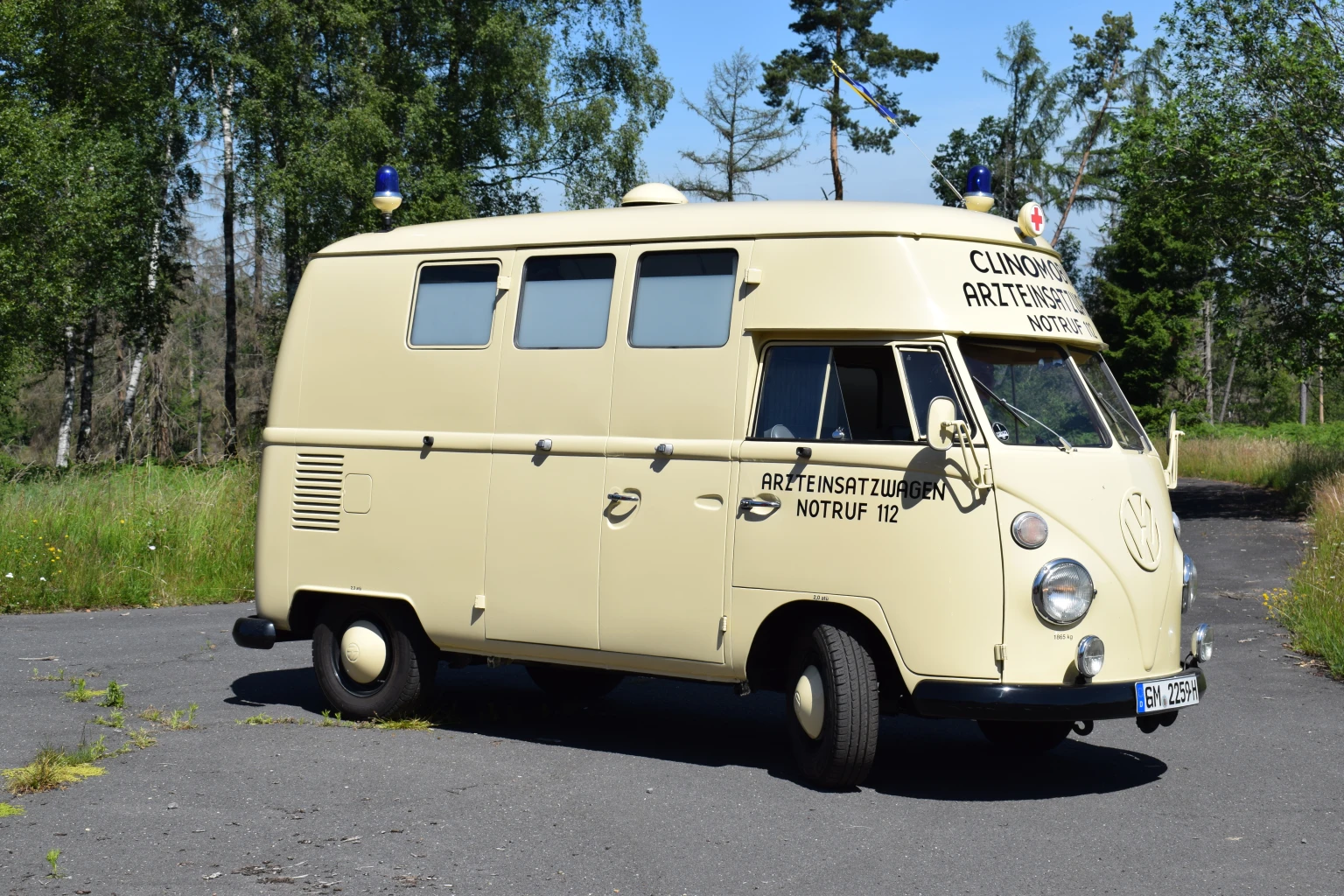
With the “Clinomobile,” the Oberberg district preserves an important piece of rescue service history. The converted Volkswagen T1 is one of the first doctor-staffed rescue vehicles in the Federal Republic of Germany and is considered a pioneer of modern rescue services. The initiator of this groundbreaking project was Professor Dr. Wolfgang Herzog, who significantly contributed to the development of emergency medical standards. The historic vehicle was extensively restored a few years ago and has since been used as a symbol of medical pioneering work – whether at promotional events, exhibitions, or traditional events. This keeps history alive – and at the same time reminds us of the beginnings of professional emergency care as we know it today.
